
Why You Should Exfoliate Before Tanning for Deeper Glow
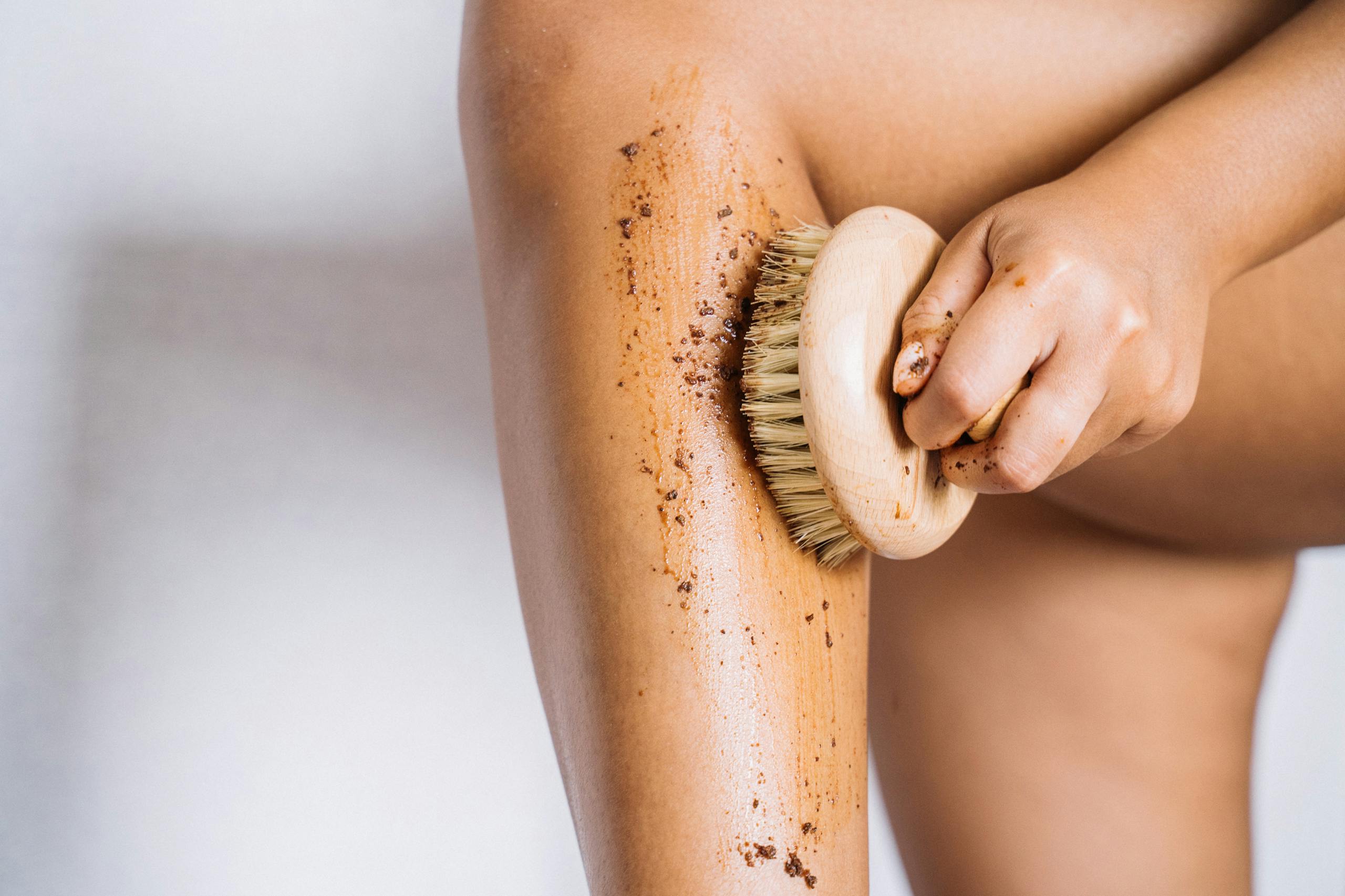
A tan can look bronze and smooth, or dark in some spots and thin in others. The difference often starts before any color goes on. When you exfoliate before tanning, you level the surface first, so the result looks richer, applies more evenly, and fades with fewer rough, patchy breaks.
Exfoliation changes the canvas your tan sits on
Tanning color does not land on the body like paint on glass. It catches more strongly anywhere the surface is rougher, drier, or built up, which is why elbows, knees, ankles, and flaky areas often turn darker first. A smoother surface changes that chain. When you remove uneven texture before tanning, the color meets a more consistent base, which helps it develop with fewer dark grabs, fewer pale skips, and a more continuous finish from one area to the next.
The visible benefit is not only better application on day one. Wear pattern changes too. Patchiness later usually starts with patchiness early, even if it is subtle at first. Slightly rough zones hold more color because they absorb it unevenly, which triggers an uneven fade once that color starts wearing off. Exfoliation reduces those peaks and dry islands, so the tan does not cling so aggressively in one place and disappear too fast in another. The effect is more polished than dramatic: the glow looks deeper because the surface beneath it looks flatter, cleaner, and more uniform.
This is why vague advice about “removing dead skin cells” misses the point. What matters is surface prep engineering. If the body feels smooth but still has residue, the tan can streak. If the body is scrubbed too hard, the texture can become inconsistent right before application. The goal is a controlled reset of the outer surface so color has fewer reasons to overdevelop, break apart, or fade in visible islands.
Exfoliated vs unprepped skin: what actually changes in the final tan
| Outcome | Exfoliated skin | Unprepped skin |
|---|---|---|
| Initial color payoff | Looks cleaner and more even, with better overall depth | Can look darker in some zones and weak in others |
| Surface evenness | Color develops across a flatter, smoother base | Rough patches grab more product and create visual breaks |
| Dry area cling | Less overdevelopment on elbows, knees, ankles, hands, and feet | High-buildup zones often turn noticeably deeper |
| Streak potential | Lower, because the application surface is more consistent | Higher, especially where residue or flaky texture remains |
| Maintenance effort | Usually easier to keep looking polished with light upkeep | Often needs more correction, blending, or touch-up work |
| Fade pattern | Breaks down more evenly and looks cleaner over time | Commonly fades in patches, dots, or dark dry clusters |
The biggest myth: more scrubbing means a better tan
The false belief is simple: if exfoliation helps, harder exfoliation must help more. It does not. Aggressive scrubbing does not guarantee smoother color payoff, and it can leave the surface less refined right before tanning. The better result comes from consistency, timing, and targeted pressure, not force.
Why over-scrubbing can make color look less polished
Hard scrubbing sounds productive because it feels thorough, but the visual result can go the other way. Too much friction can create a surface that is temporarily uneven in a new way: some zones are freshly overworked, others are still slightly rough, and the whole canvas is less balanced than it seemed in the shower. When tanning color hits that surface, it has more variation to react to, not less.
A polished tan depends on even contact. If one area has been rubbed intensely and the next has only had a quick pass, the contrast shows up later as inconsistent tone and texture. You are not trying to strip the body down to maximum smoothness. You are trying to remove the obvious buildup and leave the skin feeling level, not raw or overhandled.
Why timing matters more than intensity
A last-minute scrub often gets rushed, and rushed prep misses the point. Timing matters because color performs better on a surface that has been reset cleanly, rinsed well, and left free of leftover product film. A controlled prep window gives the body time to settle into a more uniform state before tanning starts.
For many people, that means exfoliating the day before or at least several hours before a self-tan or spray tan session, rather than attacking the skin right beforehand. UV tanning prep is slightly different because the concern is less about product transfer and more about making the surface even without leaving residue behind, but the same logic holds. Controlled prep beats frantic intensity. The tan looks better when the canvas is calm and consistent.
Why dry zones need precision, not extra force
Elbows, knees, ankles, hands, and feet do not behave like the rest of the body. They hold color more readily because the surface is typically drier and thicker there. The myth says to scrub those places hardest. The better move is to treat them more deliberately.
Give those areas focused attention first, then reduce pressure rather than increasing it. You want to lift the visible buildup without creating a harsh contrast between a heavily scrubbed joint and the smoother skin around it. Precision matters more than effort. A light, thorough pass on dry zones usually produces a more blended result than repeated friction ever will.
How to exfoliate before tanning without undoing your prep
Pick the exfoliation style that fits the tanning method
Start by matching the exfoliation method to the type of tan you want. For self-tan, a physical exfoliating mitt or a fine, non-oily scrub is often the most direct choice because it lets you feel where texture is sitting and smooth it out before product application. For a spray tan, the same logic applies, but residue control matters even more. Anything creamy, oily, or film-forming can interrupt how the spray lands and develops. For a UV session, the need is simpler: smooth the surface and skip anything that leaves a coating behind.
Acid-based exfoliators can work well if you already use them comfortably on the body and know how your skin responds, but they are not a universal last-minute fix. Their advantage is even surface refinement without scrub particles. Their limitation is timing. They usually make more sense as part of prep the day before, not minutes before color. A mitt gives immediate tactile feedback. A scrub can be useful if it rinses fully clean. An acid formula can refine texture gradually. The method changes slightly, but the target stays the same: a level, residue-free canvas.
Work high-buildup areas first
Next, go straight to the places that distort a tan most often. Elbows, knees, ankles, wrists, and any flaky patch should be the first stops, not the last. Spend the most deliberate time there while your pressure is still controlled and your attention is highest.
After those zones feel smoother, move across the rest of the body with lighter, broader passes. This sequencing matters because high-buildup areas need precision, while large areas like legs and arms usually need consistency more than intensity. If you scrub the whole body aggressively just to fix two dry spots, you create unnecessary variation where there was none before.
Rinse away every trace of residue
Then rinse more thoroughly than you think you need to. Leftover scrub grains, cleansing film, body wash residue, and oils all change how tanning color sits on the surface. A body can feel soft and still be poorly prepped if a thin layer of product remains behind.
This is where many patchy applications begin. The tan does not only respond to roughness. It also reacts to anything blocking direct, even contact. If residue sits in body creases, around ankles, near wrists, or along the hairline of the legs, color can develop in dots, skip in streaks, or cling strangely around those edges. Clean rinse-off is part of exfoliation, not an optional extra.
Leave skin product-free before tanning
Finish by keeping the skin product-free before the tanning step. Heavy lotion, oil-rich body products, deodorant, and rich creams can all interrupt even color payoff because they change slip, absorbency, and surface contact. A smooth body is not enough if it is also coated.
If one area is extremely dry, use restraint rather than covering the whole body. Some people lightly apply a prep-friendly moisturizer only to the driest zones well before self-tan, especially around hands, feet, knees, or elbows, to prevent overdevelopment there. That is a targeted correction, not a blanket layer. For spray tans, cleaner is usually better. For UV tanning, a product-free surface still gives you the clearest, least interrupted finish. The common rule is simple: no unnecessary film between the skin and the tan.
If your tan still turns patchy, find the prep gap
Dark elbows, knees, or ankles
The problem usually shows up as overly deep color on the joints and lower legs. The fix starts with prep, not with more product control during application alone.
Those areas often stayed rougher than the rest of the body, or they carried leftover lotion, scrub residue, or body wash film. Next time, exfoliate them first with measured pressure, rinse carefully around every crease, and keep rich product away from those zones before tanning unless you are using a very light, targeted buffer well ahead of time.
Dotty or uneven-looking color after application
If the tan develops in dots, tiny breaks, or visibly inconsistent patches, the surface was probably not as uniform as it felt. The cause is often a mix of rushed exfoliation, leftover residue, and uneven texture across the body.
Look at the pattern. Dots around pores, streaks near dry patches, or strange cling around ankles and wrists usually point back to prep gaps rather than formula failure. Slow the routine down. Use one exfoliation method that you can rinse fully away, give extra attention to textured areas, and avoid putting deodorant, heavy lotion, or oil-based products back on before tanning begins.
A tan that fades in patches instead of evenly
Patchy fade is not a separate issue from application quality. It is often the delayed version of the same prep mistake. Color breaks apart unevenly because it developed unevenly in the first place.
When some areas held more product on day one, those same areas tend to look darker, drier, and more fragmented a few days later. Better exfoliation improves the fade phase because it reduces those overdeveloped anchors from the start. If you want a tan to wear off cleanly, prep for the fade before you ever prep for the glow.
The useful rule is narrow and practical: control the surface, do not attack it. A tan usually looks its best when exfoliation feels deliberate, residue is fully removed, and dry zones get careful attention instead of punishment.