
Tan Legs Faster: Even Coverage With Pro-Level Tanning
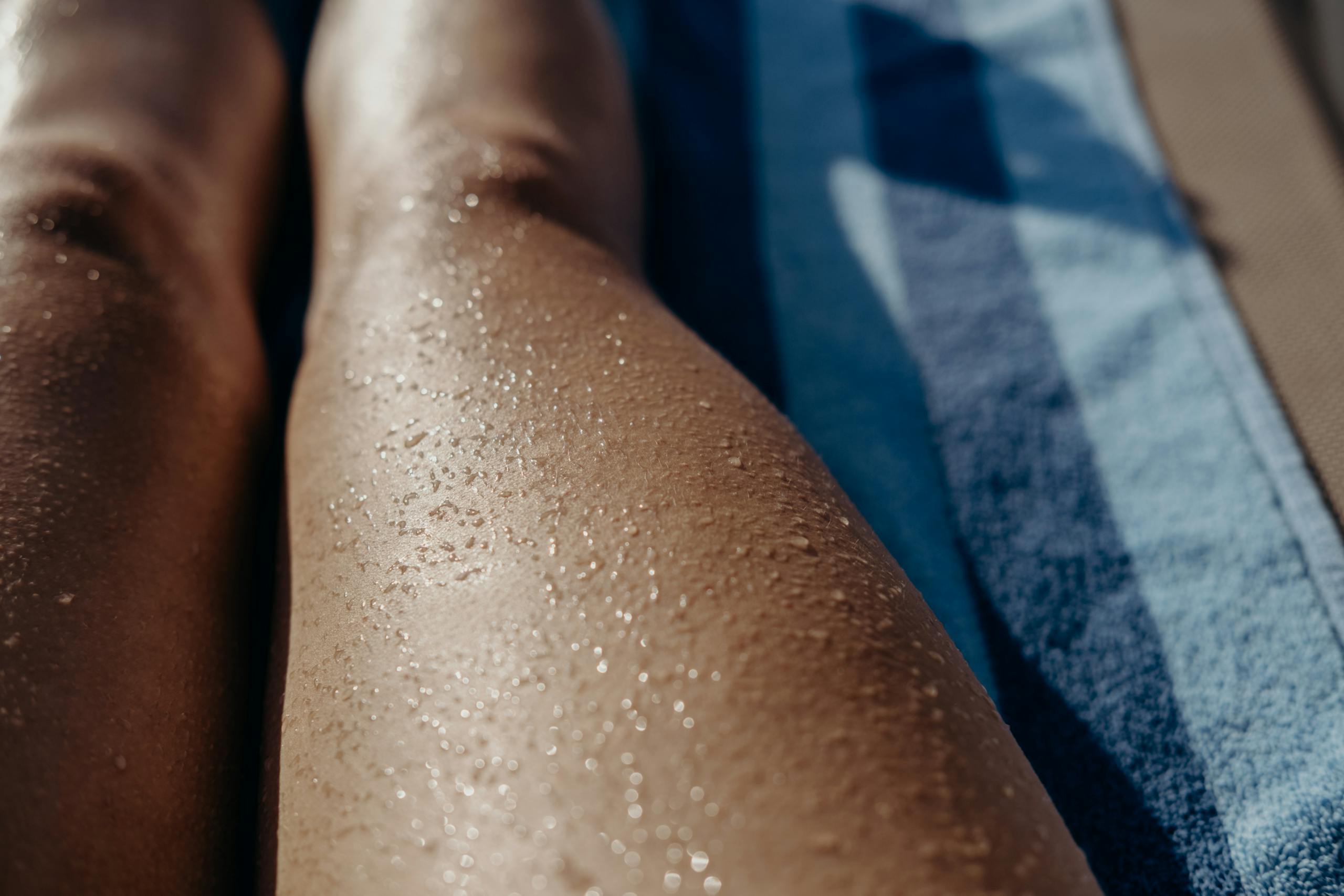
Why legs usually tan slower than the rest of the body
Your legs are the body area most likely to lag, so if you want to tan legs faster, stop giving them the same routine as your arms and shoulders. Faster payoff comes from leg-specific prep, enough product, section-by-section coverage, and tighter session timing so color builds evenly instead of hanging up on dry patches.
Legs usually tan slower because the surface behaves differently from the rest of your body. Shins, knees, ankles, and the lower calf often run drier, they deal with more daily rubbing from clothing and movement, and they are simply harder to cover well from every angle. That combination makes legs look lighter, patchier, or slower to develop even when your upper body responds quickly. In most cases, this is not a full-body tanning problem. It is a leg-execution problem, which is good news because technique can change it fast.
Extra time alone rarely fixes the issue. More exposure or another hurried coat of product can deepen some areas while the lagging zones still look flat or uneven. A better approach is to treat legs like their own project: prep the surface, choose a method that performs well on larger areas, apply with enough control to hit the front and back, and pace your sessions so you can actually see what is improving. That is how you move from random results to consistent leg color.
What makes leg tanning slow or uneven
Legs do not struggle for one single reason. They fall behind when several small factors stack up at once, and each one changes how well color can grab, spread, and hold. When you isolate those factors, the fix becomes much more practical.
Dry skin blocks smooth color pickup
Dry skin is one of the biggest reasons legs underperform. The lower leg, especially the shin and the area above the ankle, often has a rougher, thirstier surface than the arms or shoulders. When that surface is uneven, tanning product cannot spread in a clean film and natural exposure does not read as uniform depth. Some spots grab harder, others stay dull, and the end result looks lighter than it should.
This is why simply staying out longer or adding more product can backfire. Dry sections do not always need more intensity. They need a smoother base so the same amount of color reads evenly. Knees and ankles exaggerate this problem because they bend, crease, and hold onto excess more easily than flatter areas.
Shaving and friction interrupt consistency
Fresh shaving can make legs feel smooth while still leaving the surface less settled than it will be a few hours later. If you apply product immediately after or go straight into a session, the finish can look less consistent, particularly on the shin and around the knee where the skin texture is already more obvious. Then friction takes over. Socks, leggings, denim, gym wear, and even how you sit can wear down lower-leg color faster than the rest of the body.
The pattern this creates is easy to miss. You think your legs are poor tanners, but part of the issue is that color never gets the same uninterrupted chance to develop and stay put. If the front looks decent but the lower calf fades first, friction is usually part of the story.
Product spread is harder on larger leg surfaces
Legs have more uninterrupted surface area than people realize. You are covering a long vertical panel from ankle to thigh, plus inner leg, outer leg, shin, calf, knee, and the back where your line of sight is weaker. That makes underapplication very common. A small amount of lotion or mousse can seem like enough because it starts to glide, but it often thins out before full coverage is there.
This is where streaks and missed zones start. The product was not necessarily bad. The leg just needed more slip, more overlap, and a cleaner sectioning pattern. Backs of legs, outer calves, and the area just above the ankle are frequent misses because most people move too quickly through those parts.
Your tanning method affects leg results more than you think
Some methods are naturally better at producing visible leg color than others. If you depend on incidental outdoor time, the front of the leg often develops first because it gets more direct exposure and is easier to position. The back stays behind, and the overall result can look weak even if your shoulders or arms deepen faster. Methods that rely on where light happens to hit you are usually less efficient on legs.
Controlled options tend to perform better here. A gradual tanning lotion can build depth steadily across the whole leg, and a mousse with a tanning mitt gives you clearer placement on shins, calves, knees, and ankles. Instant bronzing products can also help when you want an immediate visual read of your coverage. The point is not that one method is universally better. It is that legs reward methods you can direct, inspect, and repeat precisely.
How to set up your legs for faster color payoff
Prep is where faster results begin. If your legs are hard to color evenly, do not start by increasing intensity. Start by giving the surface a better chance to respond cleanly, then everything you do after that works harder.
Exfoliate dull buildup before your session
Begin by removing the flat, uneven layer that keeps legs from looking smooth and reflective. Use an exfoliating mitt, body polish, or textured wash tool on the lower legs, knees, and ankles with moderate pressure, ideally well before your next session instead of rushing it at the last minute. Focus on places where color tends to cling or fade in patches, especially the shin, around the kneecap, and the bony edge above the ankle. This matters because a smoother surface gives you a more uniform starting point, so color reads cleaner instead of catching on rough areas.
Do not overwork the entire leg just because one area runs dry. Put your attention where buildup actually shows. Before moving on, run your hand over the leg. It should feel polished and even, not scrubbed raw or overloaded with residue.
Moisturize dry zones without overloading the skin
After exfoliation, bring moisture back to the areas that usually sabotage even coverage. A body moisturizer works best when you treat it like a precision tool rather than a blanket layer. Use a normal amount on the shin and calf earlier in your routine, then a lighter pass on knees, ankles, and the tops of feet where product tends to build too dark or too thick. The goal is balance: enough comfort and flexibility in the surface to improve spread, but not so much slip that your tanning product slides around.
At this point, less is often more right before application. If the leg still feels greasy, wait longer or wipe away excess. Well-conditioned skin supports faster, smoother payoff. Overloaded skin usually delays it.
Time shaving so your skin is smooth and settled
Shave on a schedule that leaves your legs smooth by the time you tan, not mid-adjustment. For most people, that means handling it several hours before product application or planned exposure instead of doing it immediately beforehand. The extra gap gives the surface time to look more consistent and keeps your routine from stacking too many variables at once. When shaving is rushed, you may get a leg that feels ready but does not hold or display color as evenly as it could.
Once that is done, leave the legs alone. No second pass, no last-minute touch-up, no extra friction from rough towels. A settled surface almost always gives a stronger finish than a freshly worked one.
Work with clean, product-free legs before application or sun exposure
Finish prep with a clean canvas. Wash off body oil, heavy lotion, fragrance residue, and anything else that can create slide, barrier spots, or shine that tricks you into thinking the leg is more evenly covered than it is. This matters whether you are applying self-tanner or relying on outdoor exposure, because leftover product can change how the surface reflects light and how smoothly color appears to build. Clean legs also make it easier to see the true condition of dry zones, which helps you correct them instead of guessing.
Right before you start, check the practical details that often get ignored: no damp patches behind the knee, no rich cream sitting around the ankle, and no missed residue along the shin. A clean setup is not glamorous, but it is one of the fastest ways to make the next step perform better.
The fastest ways to improve leg tanning results
Once prep is handled, the fastest gains come from four controllable levers: method, amount, coverage pattern, and pacing. Change those, and legs usually stop acting like the stubborn area of your routine.
Choose a method that builds visible color on legs efficiently
If your current approach gives you strong upper-body color and weak legs, switch to a method you can direct across the full leg. A gradual tanning lotion is efficient when you want steady build with low guesswork, while a mousse paired with a tanning mitt is better when you want faster visual payoff and tighter control around the calf, shin, and knee.
Relying on incidental outdoor time tends to produce slower, less balanced results on legs because coverage depends too much on angle and position. A controlled product usually gives you a visible improvement sooner because every part of the leg actually gets addressed.
Use enough product to cover the full leg evenly
If your legs look faint or streaky after application, increase the amount of product before you increase anything else. Most patchiness comes from spreading a small amount too far over a large area. You want enough slip for the mitt or hand to glide without dragging, and enough saturation that the shin and calf look equally coated.
A practical rule helps here: treat each lower leg and each upper leg as its own zone. When you give each zone a deliberate amount instead of guessing for the whole limb, depth usually looks fuller and more even on the first pass.
Apply in sections so no area gets missed
If the front develops better than the sides or back, your application pattern is too broad. Break each leg into manageable sections such as ankle to knee and knee to thigh, then cover the front, outer side, inner side, and back on purpose. This slows you down just enough to catch the common misses around the lower calf, behind the knee, and the outer shin.
The result delta is immediate. Sectioning reduces streaks, improves consistency at the edges of each pass, and makes it far easier to keep both legs looking matched instead of randomly deeper on one side.
Adjust session length and frequency instead of guessing
If you keep chasing faster results with random long sessions or sporadic reapplication, replace that with a repeatable schedule. For gradual tanning lotion, daily use until you hit the shade you want often works better than a heavy, inconsistent coat. For mousse, one well-applied session followed by measured maintenance usually beats constant touch-ups.
Exposure-based routines also respond better to pacing than guesswork. Shorter, consistent sessions let you evaluate how the legs are actually building and where they are lagging. That means you can adjust method or coverage before unevenness becomes the main story.
If your legs still look lighter, streaky, or slow to develop
When leg color disappoints, the pattern usually points straight to the fix. Read the symptom first, correct the likely cause, and use the next session to tighten one variable instead of changing everything at once.
Legs stay lighter than the rest of your body
This usually happens when your legs need more prep and a more controlled method than the rest of your body. Dry lower legs, thin product application, or a method that depends on casual exposure can all leave the legs a shade behind even when your arms tan quickly.
Correct it by giving legs their own upgrade, not by overworking your whole routine. Exfoliate more deliberately, moisturize the driest zones in advance, and choose a gradual tanning lotion or mitt-applied mousse for the legs if your current method is underdelivering there. Next session, compare your front shin and outer calf after the first pass. If those areas look weak, your legs still need more product or better sectioning.
Color looks uneven around knees or ankles
The cause is usually excess product landing on the driest, most textured areas. Knees and ankles hold onto more than flatter skin, so a normal pass can read too dark there while the rest of the leg looks fine.
Fix it by applying a very light amount of moisturizer to those zones beforehand and blending with a lighter hand when you pass over them. If the unevenness is already there, buff the edges with a little lotion to soften the contrast instead of layering more color on top. On your next application, make knees and ankles the places you feather through, not the places you stop and press into.
The front of the legs develops better than the back
This is usually a coverage problem, not a tanning-speed problem. You can see the shin easily, so it gets your attention. The back of the calf and the area behind the knee tend to get a rushed pass or no real pass at all.
Correct it by turning the leg and treating the back as a separate panel. Bend the knee slightly, run your mitt or product from lower calf upward, and then cross-check both legs in a mirror before you finish. Build a prevention habit by doing one back-of-leg sweep before every final blend, even when the front already looks done.
Your tan fades fast from the legs
Fast fade on the legs usually points to dryness and friction, especially on the lower half. Clothing contact, frequent shaving, and skipping moisture between sessions can make leg color disappear long before your upper body changes.
Fix it with maintenance instead of chasing fresh intensity every time. Use a body moisturizer consistently, add a gradual tanning lotion between full applications if you want depth to hold, and keep friction-heavy moments in mind when you plan your routine. Keep a mitt and a small bottle of lotion where you get dressed, because the leg color that lasts is often built by that quick, deliberate touch-up before the fade becomes obvious.