
I Stopped Trying to Go Dark and Started Going for Glow Instead. My Summer Tan Looks Completely Different.
For years I measured every self-tanner by how dark it could go. I wanted depth. I wanted the kind of color that looked like a full week in the sun. I bought ultra darks, I layered, I developed overnight and checked in the morning hoping for more. What I kept getting was a tan that looked heavy, sometimes orange at the joints, and nothing like what I actually wanted when I pictured a summer glow self tan.
This summer I stopped chasing dark. Not self-tanning, just the depth obsession. I shifted to lighter formulas and a different idea of what the result should look like. The tan I have now is the first one in years I actually liked. It sounds obvious. It took me a while to get there.
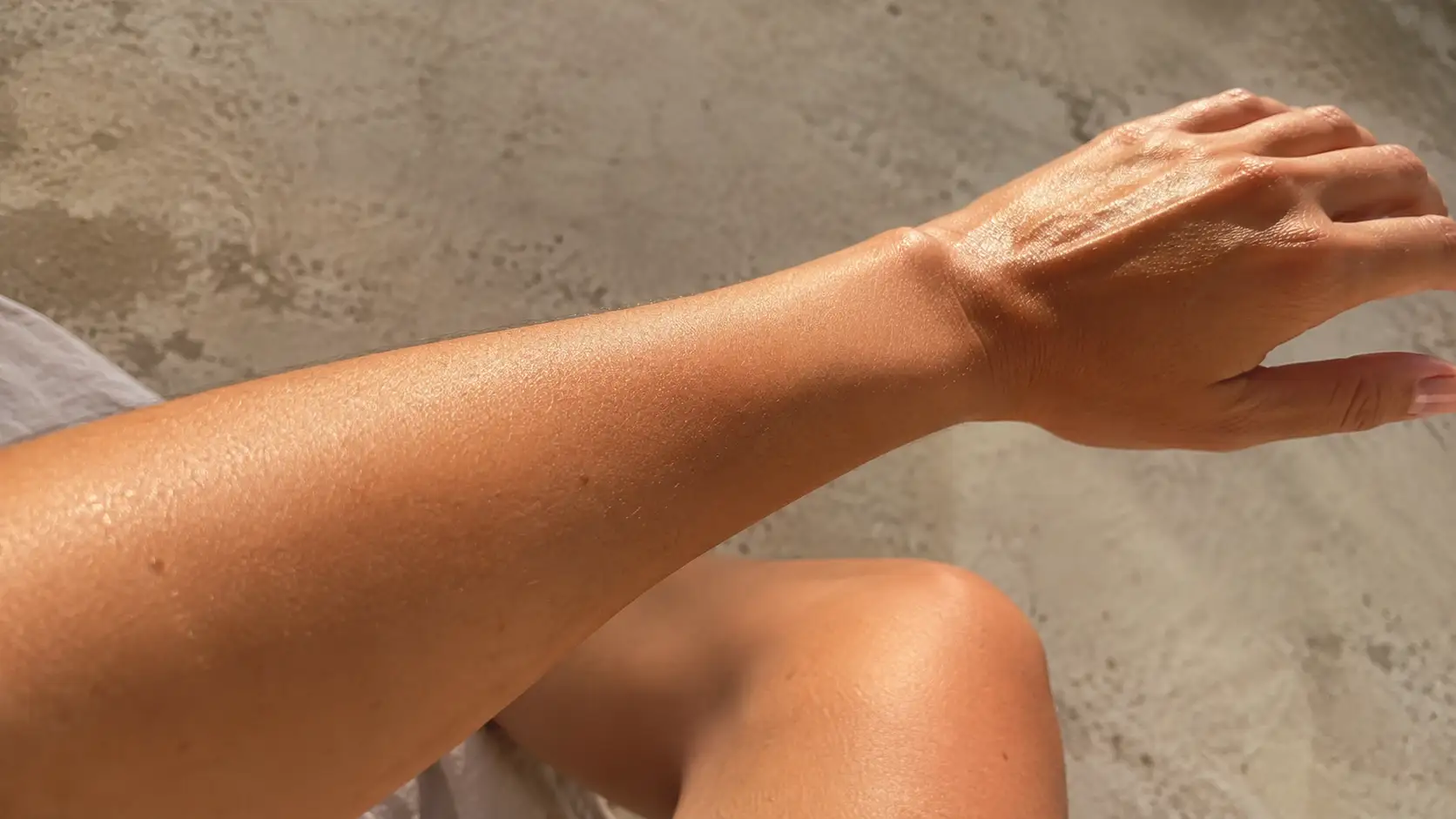
A glow self tan is not about applying less product. It is about choosing formulas that add luminosity alongside DHA color, and building in thinner layers that reflect light instead of absorbing it. The difference shows most in direct sunlight and in photos.
What I Was Actually Chasing (And Why Dark Was the Wrong Target)
When I look back at photos from summers where I was self-tanning heavily, the tan itself looked fine. Deep, even, consistent. But it did not look like a real tan. It looked like I had applied something. No warmth in the texture. No sense the color came from underneath. Flat. Technically dark and visually dull at the same time, which should not be possible.
What I was actually going for was skin that looks warm and hydrated, with a golden undertone that shifts in the light. That is a luminosity question, not a depth question. Depth comes from DHA concentration. Luminosity comes from hydration, skin texture, and the base ingredients in the formula. I had been pulling the wrong lever for years.
The other issue with chasing dark is that it amplifies every application mistake. Dry patches go darker. Transition zones build up faster. On a lighter layer, those errors are less visible. On a heavy application, every imperfection reads clearly against the deep base. I was making my technique harder than it needed to be.
What Glow Actually Means in Practice
Glow in self-tanning comes from two things: the formula base and the hydration level of your skin when the color develops. Formulas with hyaluronic acid, aloe, or lightweight oils in the base keep the skin surface hydrated through development. Hydrated skin reflects light. Dry skin absorbs it. The same DHA percentage reads differently depending on what is underneath it.
The products that give me the most luminous result now are gradual tanners used consistently, tanning drops mixed into my regular moisturizer, and clear gel formulas without a heavy bronzing guide. All three have lower DHA concentrations than the ultra-dark mousses I was using before. The color is lighter, but it looks like skin instead of a coating.
Products that add depth vs products that add glow
High-DHA overnight mousses and foams are built for depth. They develop fast and dark, and that is exactly what they are designed to do. Gradual lotions, tanning drops, and clear gels are built differently. They develop slower, in thinner color layers, and the formulas typically carry more moisturizing ingredients because the DHA percentage is lower and there is room for other things in the formula.
Neither is better by default. It depends on what you are going for. If you want to look like you spent a week in Tulum, a high-DHA mousse is the right tool. If you want skin that naturally looks warm and golden, the lighter formats get there faster than stacking dark layers ever did for me.
If you are switching from dark to glow, start with a single layer of a gradual tanner or drops for three consecutive days before adding anything else. Three days of consistent light application gives you a base that looks natural. Building from there is easier than stripping back from too much.
What Changed in My Routine
The biggest switch was replacing my overnight ultra-dark mousse with a gradual tanner used every other day. The color built over four or five days instead of one night, and after a week the result was warmer and more even than anything I had done before. I did not have that adjustment period where the color was too much and I spent three days waiting for it to calm down.
On days between gradual tanner applications, I started adding a few drops of tanning drops to my regular body moisturizer. Two or three drops per pump, worked in the same way as any lotion. The color contribution is subtle but it fills in any areas the gradual tanner did not reach evenly, and it keeps the skin hydrated so the existing tan does not fade patchily.
For the face I switched to a clear self-tanning gel with no guide color. Lighter formulas work better on the face anyway because the skin there is more sensitive to buildup, and clear gels are easier to apply precisely around the hairline and brow without the bronzer getting in the way.
What My Summer Tan Looks Like Now
The color is lighter than what I used to aim for. In numbers, probably a medium when I used to go dark. But in photos, in sunlight, and in how it reads against my actual skin tone, it looks more convincing than the dark version ever did. There is variation in the color across different parts of my body, which is what a real tan has. The joints are not darker than the flat surfaces. The ankles are not a different shade from the shins.
The fade is also completely different. Lighter, more hydrated applications fade evenly. The gradual tanner approach fades like a real tan fades, which is slowly and uniformly. I am not waiting for a patchy dark layer to shed in pieces. I reapply every two or three days to maintain, and the whole routine takes about ten minutes including the drops I mix into my moisturizer.
I do not think I will go back to chasing dark. I finally have what I was looking for. And it is easier to maintain than anything I was doing before, which honestly was the bigger surprise.
Here's Where I Landed
Switching from a dark-depth approach to a glow-focused routine means choosing gradual tanners, drops, and lighter formulas over high-DHA overnight applications. The color is lighter but it reads more natural, fades more evenly, and requires less correction. For a summer tan that looks like skin rather than a coating, luminosity is a more useful goal than depth.
Peta Jane Self Tanner Review: Does the Allure-Winning Mousse Actually Deliver?
GlowDrop Review: Do Drinkable Tanning Drops Actually Work?
Self-Tanner on Tattoos: How It Changes the Look of Healed Ink
How to Self-Tan Hands Without Orange Knuckles
Cyklar Self-Tanning Milky Essence Review: Who Is It For?
Melanotan II vs DHA Self-Tanner: What the Barbie Peptide Gets Wrong