
Why Do I Burn Instead of Tan: How to Fix It Fast
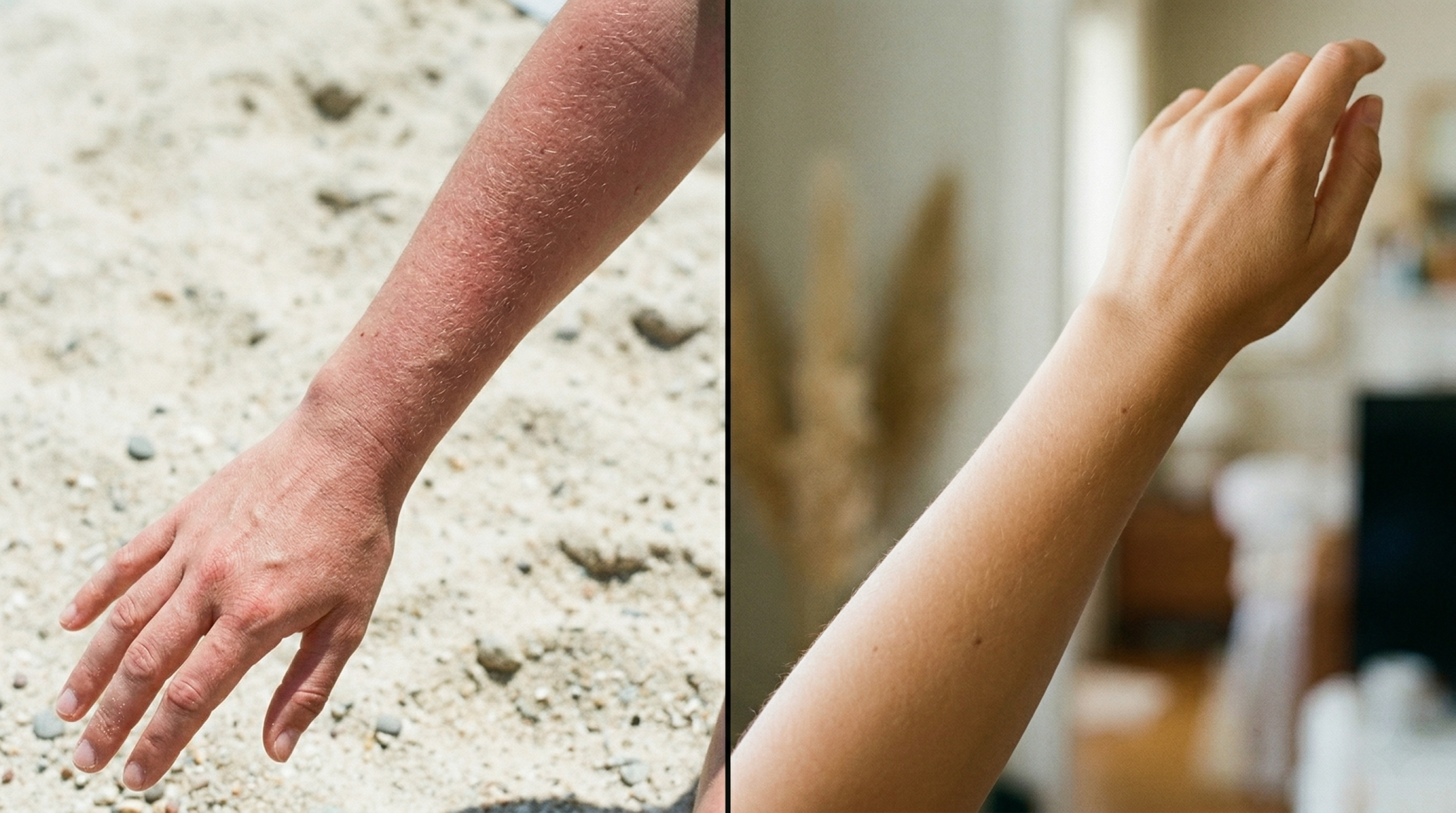
You go outside hoping to tan and end up red instead. No color, just that tight uncomfortable feeling that tells you it went wrong again: you burned instead of tanning. A few days later it fades, peels, and you’re back to square one.
It feels like you’re doing exactly the same thing as everyone else, but your skin just reacts differently. And the frustrating part is you never quite know where you went wrong.
Here’s what I’ve noticed after years of this: burning instead of tanning is almost always fixable. It’s not a permanent sentence. It’s a setup problem, and most people are making one of the same few mistakes.
Burning and tanning are not the same thing
This is where most people’s thinking goes wrong, and it’s worth clearing up before anything else.
Think of it like this: your skin needs time to turn sun exposure into color. The process is slow by design. That’s why a tan doesn’t show up immediately after you come inside. It develops over the following 24 to 48 hours. When too much UV hits at once, the skin can’t keep up with that conversion. So instead of switching into color-building mode, it switches into defense mode. That’s the burn.
Burning is not tanning that went too far. They’re two completely separate responses, and when one wins, the other loses. When you burn, the tanning process barely got started before something else took over entirely.
That’s also why the “burn first, tan later” approach doesn’t work. The skin that burned is focused on repair. The surface that peels away takes whatever early pigment had started to develop with it. You don’t end up with a tan underneath. You end up reset.
You’re crossing your skin’s limit too fast
I had a friend who would burn every single time we went to the beach together, even when we used the same products and spent the same amount of time outside. Same sun, same SPF, completely different results. She assumed she just couldn’t tan.
What was actually happening was that her threshold, the point where the redness response takes over from the tanning one, was lower than mine. Not dramatically lower. Just enough that the same conditions that worked for me pushed her past it.
Every skin type has that threshold. The catch is that crossing it doesn’t feel like anything in the moment. Redness shows up 60 to 90 minutes after the exposure that caused it. So you’re sitting outside feeling completely fine, and it’s already too late.
The signals that come before the burn, while you’re still in time to act, are subtler: a warmth on the shoulders that goes beyond what the air explains, a faint tightness on the chest or upper back, skin that looks slightly pink at the edges before the session ends. Any of those is the moment to come inside. Not in ten minutes. Right then.
My friend started leaving before she felt done. That one change stopped the burn cycle almost immediately. Within two weeks she had a base she’d never managed to build before.
The time of day changes your results more than anything else
Most people who burn consistently are going outside between 11am and 3pm. That window is the issue more often than anything else.
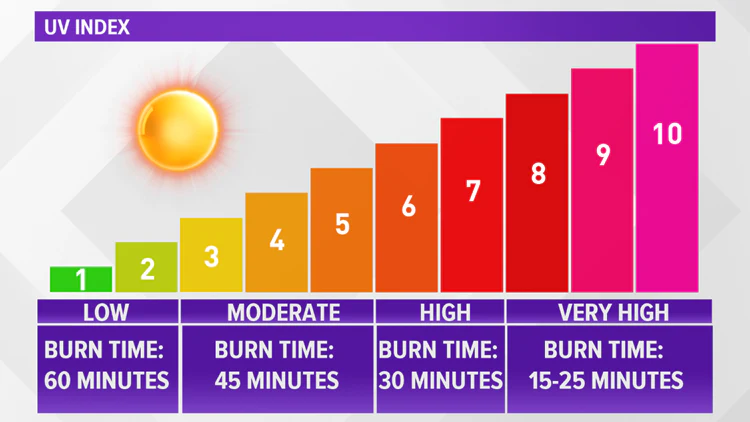
UV doesn’t stay constant through the day. It peaks around solar noon and stays high through early afternoon. Think of it this way: a minute of sun at 9am and a minute at 1pm feel similar, but they’re not the same dose. At peak hours in summer, each minute outside contains significantly more UV. For fair skin, that difference is enough to hit the burn threshold in 15 to 20 minutes, before most people even consider coming inside.
Moving to morning doesn’t mean settling for less. An hour at 9am in summer often produces more visible color than 30 minutes at noon, and without the burn. The UV is still there and still working. It’s just coming in at a rate the skin can actually use. The best time of day to tan breaks down exactly when that productive window falls depending on season and location.
You’re staying out longer than your skin can use
Your skin can only produce a certain amount of pigment in a single session. Once it hits that limit for the day, more time in the sun doesn’t build more color. It just adds more UV to a surface that’s already done responding. That’s when redness moves in.
For fair skin, that limit can arrive at 25 or 30 minutes. After that point, nothing useful is happening for the tan, and every extra minute increases the chance of burning.
Three sessions of 25 minutes across a week will almost always produce more color than one session of 90 minutes. The color from the first session develops fully before the second one builds on it. The long single session usually resets it.
You’re trying to get a week’s worth of color in one afternoon
This is the pattern that locks people into the burn cycle indefinitely. Before a holiday, a wedding, an event, the instinct is to maximize time outside because there’s no time to do it gradually. And it burns every time, because the skin doesn’t respond to urgency. It responds to rate of input.
The worse part is what it does to the next sessions. When a session goes too long, the color that started to develop resets. You lose three or four days of progress. Then you try another long session to make up for it. It burns again. The base never establishes because each session keeps knocking back what the previous one started.
The first two weeks of building a base are foundation work. Short sessions, appropriate timing, consistent frequency. The tolerance that builds during that period is what makes later sessions actually productive. The can pale skin tan article covers how that baseline develops and what realistic progress looks like at each stage.
Your skin type sets the threshold, not the outcome
If you have fair skin and light eyes and have always leaned toward burning, your threshold is lower by default. That’s not a reason to stop trying. It’s a reason the variables need to be tighter.
The mistake is comparing your session parameters to someone with olive skin and expecting the same results. They’re working with a higher threshold. The noon session that gives them a solid base will send fair skin into a burn cycle. Same sun, completely different outcome, and neither person did anything wrong. The inputs just need to be calibrated differently.
Your SPF setup is off
SPF filters UV. At SPF 50, almost all UVB is blocked. Think of it like turning the tap down so low nothing useful comes through. For someone trying to develop color, that means going outside and getting almost nothing from the session despite being there for an hour.
The other mistake is no SPF during peak hours, which for fair skin tips straight into burn territory.
The practical fix is matching SPF to conditions. A lower SPF during a morning session in moderate UV lets the skin receive enough input to develop color. The linked article covers exactly how each level changes the color development outcome. The does sunscreen stop tanning article covers exactly how each level changes the color development outcome.
Fix this in your next session
If the previous sessions have been burning, here’s the exact sequence to run differently
-
Go out earlier
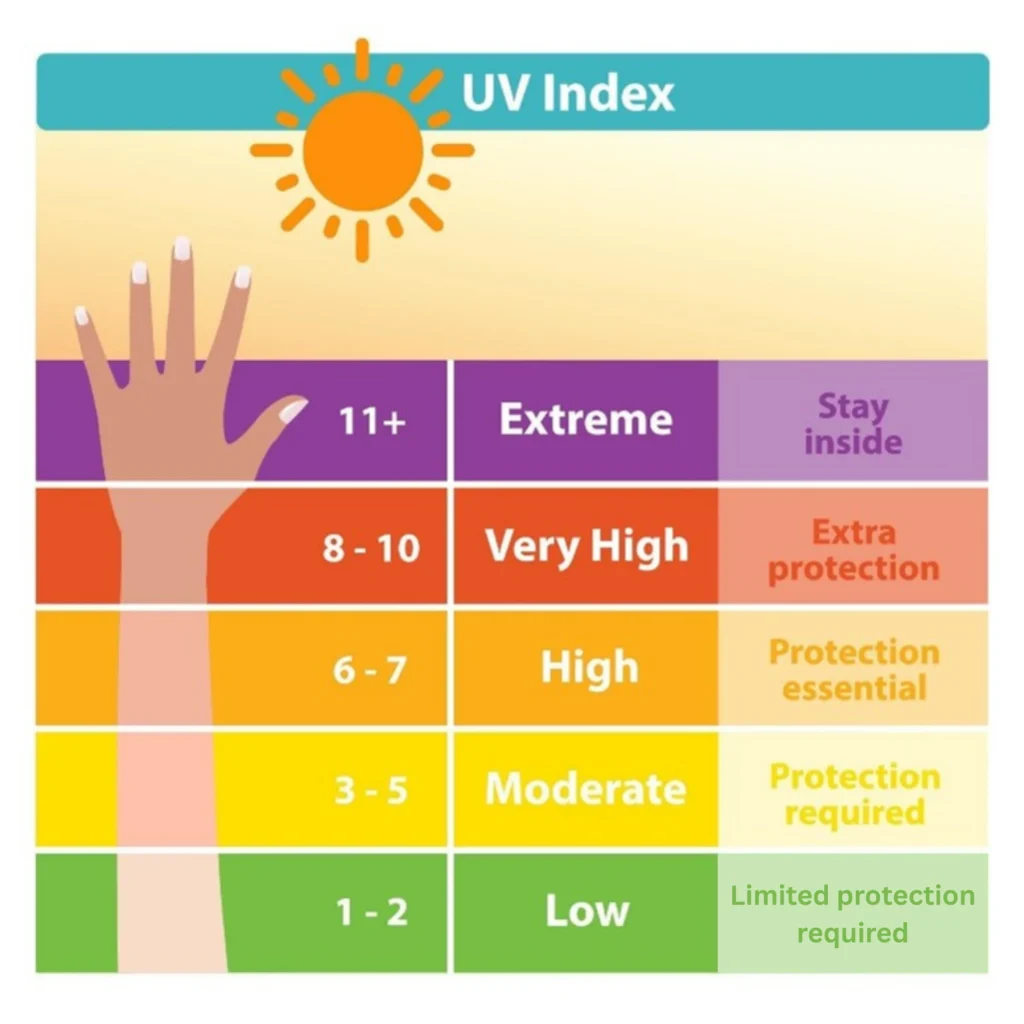
Before 10am if possible. Check the UV index first. Anything between 3 and 5 is the productive window for most fair skin types. Above 6 and the intensity margin gets tight fast.
-
Cut session time in half
f your sessions have been running 60 to 90 minutes, start at 25. That’s it. Not because 25 feels like tanning, but because it keeps you inside the threshold while the base starts to build.
-
Watch for early signals
During the session, pay attention to how long you’ve been out and check the UV index before you go. Keeping sessions short at the start removes the guesswork entirely.
-
Stop before you're done
Leave while everything still feels fine. This is the hardest adjustment because it feels like quitting early. But the color develops after you come inside, not while you’re still out there. A session that ends early produces more lasting color than one that runs until the threshold is crossed.
-
Repeat the next day or the day after
Frequency matters more than session length at this stage. Three sessions of 25 minutes builds a better base than one session of 90 minutes, every time.
A tanning accelerator applied before the session gives melanin production a head start, so more of the UV goes toward color before the redness response has a chance to compete. The how to use tanning oil guide covers timing and how to pair it with SPF when both are needed.
Once you fix the right variable, the difference is usually obvious within a few sessions.
What it looks like when it’s working
During a session inside the threshold: the skin feels warm but not hot, no tightness, no early pinkness. You come inside before feeling finished.
A few hours after: the skin looks warm in tone but not red. No heat coming off it when you hold your hand close.
The next morning: there’s color. Not a dramatic change after one session, but something that wasn’t there yesterday. A warmth in the skin’s tone that builds with each session rather than resetting with each burn.
That’s what productive tanning progression actually looks like. If what you’re experiencing is sessions with no color development at all rather than burning, the causes are different, why am I not getting tan diagnoses that case.
Frequently Asked Questions
Burning instead of tanning means UV is arriving faster than your skin can convert into color. The most common causes are tanning during peak midday hours and sessions that run too long. Moving to morning sessions and cutting duration to around 25 minutes breaks the cycle for most people within a couple of weeks.
Yes, for most skin types. Burning means the conditions exceeded your current threshold, not that tanning is impossible. Short consistent sessions in appropriate conditions gradually build a base that raises the threshold and makes longer sessions more productive over time.
Red and brown are different responses to UV, not the same one at different intensities. When UV arrives faster than the skin can process into pigment, the redness response takes over. Adjusting the rate through timing and session length lets the color response run ahead instead.
UV index is almost always higher at holiday destinations, particularly near the equator or at altitude. The same session length that works at home produces a much higher UV dose abroad. Arriving with no base and spending long afternoons in peak conditions means hitting the burn threshold very fast. Two or three short morning sessions at the start before extending prevents most of it.
Not reliably, particularly for fair skin. The peeling that follows strips away whatever surface pigment had started to form. The skin resets rather than progresses, which is why the burn-wait-burn cycle produces almost no lasting color over time.
Peta Jane Self Tanner Review: Does the Allure-Winning Mousse Actually Deliver?
GlowDrop Review: Do Drinkable Tanning Drops Actually Work?
Self-Tanner on Tattoos: How It Changes the Look of Healed Ink
How to Self-Tan Hands Without Orange Knuckles
Cyklar Self-Tanning Milky Essence Review: Who Is It For?
Melanotan II vs DHA Self-Tanner: What the Barbie Peptide Gets Wrong