
How to Prepare for a Spray Tan: What Each Step Actually Does to Your Results
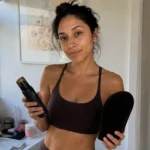

Most guides on how to prepare for a spray tan hand you a list of rules. Skip deodorant. Exfoliate the night before. Wear dark clothes. The list is accurate, but it skips the part that actually makes the rules stick: what happens to your tan when you ignore them.
What Happens to Your Tan When You Don’t Prepare for a Spray Tan Properly
A spray tan works through DHA (dihydroxyacetone), a colorless compound that reacts with amino acids in the outermost layer of your skin to produce a brown pigment. The reaction takes a few hours to develop fully and sits entirely on that top skin layer. It does not go deeper.
Whether that reaction produces even color or a patchy, fast-fading result depends on the surface condition of your skin when the solution lands, and what happens to that surface in the hours after. Anything that creates a barrier, alters your skin’s pH, or leaves residue behind changes how DHA binds across different zones. Those differences show up in the result.
Getting a consistent finish requires a consistent surface. Product-free, same texture zone to zone. When one area is different from the rest, it develops differently too.
How to Prepare for a Spray Tan: 48 Hours Before
Exfoliate the night before, not the morning of
Exfoliating 48 hours before your appointment removes the buildup of dry, uneven cells that would otherwise grab extra solution. Rough zones like elbows, knees, ankles, and wrists hold DHA more aggressively because the texture gives the formula more surface area to cling to. Exfoliating levels those zones so the color settles evenly rather than pooling in textured patches.
Do not exfoliate the morning of the appointment. Freshly worked skin needs a few hours to settle before it receives solution. The night before is the right call: no new buildup has formed yet, and the surface has had time to stabilize before you walk in.
Use an oil-free exfoliant or an exfoliating mitt. Any residual oil on the surface after rinsing creates a partial barrier that blocks DHA contact. A mitt gives you better pressure control on joint zones without leaving residue behind.
Shave or wax at least 24 hours before
Shaving opens the hair follicle and leaves a small depression around each pore. When spray tan solution lands on freshly shaved skin, it settles into those openings and concentrates. The result is a pattern of darker dots across the shaved area, most visible on legs. Shaving two hours before your appointment leaves those pores open. The solution will find them.
Twenty-four hours gives the follicle time to close and the surface to smooth back out. Waxing requires more lead time than shaving does. It removes hair from the root and opens the follicle wider in the process. Allow 48 hours minimum after waxing before your session.
24 Hours Before: Products to Stop Using
Stop retinol and chemical exfoliants two to three days out
Retinol accelerates skin cell turnover. When you use it right before a spray tan, the top layer is actively shedding faster than usual. DHA binds to those cells while they are already on their way out, so the tan fades in patches well before it should. Stop retinol and any AHA or BHA products two to three days before your session. The surface needs to be in a stable phase, not mid-turnover.
Avoid products with mineral oil or petroleum
Some body lotions, hair removal creams, and heavy moisturizers contain mineral oil or petroleum-based ingredients. These sit on top of the skin rather than absorbing, and they do not rinse off fully with water alone. If they are present when the spray tan solution lands, they create an uneven barrier. Some zones get full DHA contact; others get reduced contact. The color develops at different intensities across the same area.
Check the ingredients on anything you apply in the 24 hours before your appointment. If mineral oil or petrolatum appears near the top of the list, skip it.
The Day of Your Appointment: Arrive Product-Free
Shower, then apply nothing
Shower before your appointment using a mild, sulfate-free wash, then put nothing on after. Lotion, deodorant, perfume, makeup: all of them change the surface in ways that affect the result.
Deodorant is the one most people underestimate. It alters the pH under your arms, and DHA develops faster in more alkaline environments. Arrive with deodorant residue there and that zone overdevelops relative to the rest of your body. The underarm area ends up a visibly different shade and it is one of the most common reasons a spray tan goes wrong.
Perfume contains alcohol, which can disrupt how DHA bonds to the skin and produce spotty development where it was sprayed. Even a light body lotion leaves a film that changes how the solution spreads. Dry, bare skin gives the formula its most consistent base to work from.
Remove jewelry before you leave the house
Necklaces, rings, and bracelets block the solution from reaching the skin beneath them. If you remove them mid-session, the area under each piece will be lighter than the surrounding skin. Take everything off before you leave home so you are not pulling bracelets over a freshly sprayed arm at the salon.
What to Wear to a Spray Tan
Wear dark, loose-fitting clothing to your appointment and home afterward. The solution is still developing for several hours after you leave the salon. Any friction against the skin during that window can disrupt the surface before the DHA has fully bonded.
Tight waistbands, bra straps, leggings, and socks all create pressure lines. Where fabric presses, color either fades faster or develops unevenly. Dark clothing protects your pieces from any transfer during development.
In practice: a loose cotton t-shirt, wide-leg sweatpants or a maxi skirt, slides or open sandals. Skip anything with an elastic waistband that sits against the skin. Open-toed shoes matter more than people expect. Socks or closed shoes over freshly sprayed feet leave marks that are hard to miss.
If You Only Have 12 Hours
A full 48-hour prep is the standard for how to prepare for a spray tan. If your appointment is tomorrow morning and you have not started yet, prioritize these steps in order:
- Exfoliate tonight with an oil-free mitt, focusing on elbows, knees, and ankles
- Shave tonight (12 hours is enough for follicles to settle, though 24 is better)
- Skip retinol and heavy moisturizers tonight
- Shower in the morning with a mild wash, apply nothing after
- Wear loose, dark clothing to the appointment
That covers the essentials. The result will be good, not perfect. A full 48-hour prep will always get you more even, longer-lasting color. But arriving with product on your skin is where things go noticeably sideways.
Common Mistakes When Preparing for a Spray Tan
| Mistake | What it does to your color |
|---|---|
| Shaving 1-2 hours before | Open follicles collect extra solution, leaving small dark dots across shaved areas |
| Applying body lotion before the session | Uneven DHA contact produces patchy color where lotion was absorbed |
| Wearing a bra or tight waistband home | Fabric pressure during development leaves pale stripes where it pressed |
| Arriving with deodorant on | Alkaline pH under arms causes formula to overdevelop there relative to the rest of the body |
| Skipping exfoliation | Rough zones on elbows, knees, and ankles go darker than surrounding skin |
| Using retinol the night before | Accelerated cell turnover causes the tan to fade in uneven patches faster than expected |
Every outcome in that table is predictable and avoidable. The prep routine takes maybe 20 minutes across two days. The payoff in even, consistent color is worth the planning, and keeping that color longer starts the moment you leave the salon.
GlowDrop Review: Do Drinkable Tanning Drops Actually Work?
Self-Tanner on Tattoos: How It Changes the Look of Healed Ink
How to Self-Tan Hands Without Orange Knuckles
Cyklar Self-Tanning Milky Essence Review: Who Is It For?
Melanotan II vs DHA Self-Tanner: What the Barbie Peptide Gets Wrong
Can You Use Retinol With Self Tanner? A Night-by-Night Schedule