
What Fades a Spray Tan Fast: Products and Habits That Cut Color Short
Most spray tans don’t fade naturally. They fade early because of a handful of everyday products people don’t realize are affecting the color.
A spray tan lasts between five and ten days on most people. The difference between five and ten is almost never the solution or the technician. It tends to come down to what goes on the skin in the 48 hours after the appointment and what gets used daily during the maintenance window.
Most aftercare guides say moisturize and avoid hot water. That is correct but incomplete. The real issue is more specific: certain ingredients in everyday body lotions, washes, and skincare products can actively interfere with the DHA reaction that creates the color. Some appear in products marketed as moisturizing. Some feel completely neutral on the skin. They tend to accelerate fading anyway.
Every product that shortens a spray tan works through one of two mechanisms: it either speeds up the shedding of the surface skin layer where the color lives, or it directly disrupts the DHA reaction itself. Understanding which category a product falls into makes it much easier to know what to avoid and what to swap in.
Based on standard spray tan aftercare practices used across the professional tanning industry and aligned with how DHA interacts with the outer skin layer.
Why spray tan color fades the way it does
A spray tan works through DHA, a colorless compound that reacts with amino acids in the outermost layer of skin to create a bronze tone. That layer naturally sheds over time as skin renews itself, which is why the tan fades gradually rather than all at once.
Anything that speeds up that surface shedding shortens the tan. Anything that interferes with the DHA color layer directly tends to remove it faster. Those two mechanisms explain why certain product categories are associated with faster fading regardless of how gentle they feel on the skin.
The tan usually looks best between days three and five. Fading that starts before day three almost always points to something applied in the first 48 hours. Fading that turns patchy rather than even typically points to daily product habits during the maintenance window.
Products commonly associated with faster fading
Oil-based lotions and body oils
Oil is the category that tends to cause the most fading and the most confusion. Body oils, oil-based moisturizers, and formulas with mineral oil, coconut oil, or other rich emollients high on the ingredient list are commonly associated with faster color loss.
The reason comes down to how these formulas interact with the surface layer. Oil-based products move through the outermost skin layer rather than sitting on top of it, and in doing so can disrupt the color layer that the DHA reaction has formed there. The result tends to be uneven fading that looks patchy rather than gradual.
Coconut oil is the one people are most surprised by because it is marketed as natural and gentle. It falls into this same category. The same applies to most body oils regardless of how they feel on application. Consider saving them for after the tan has fully faded.
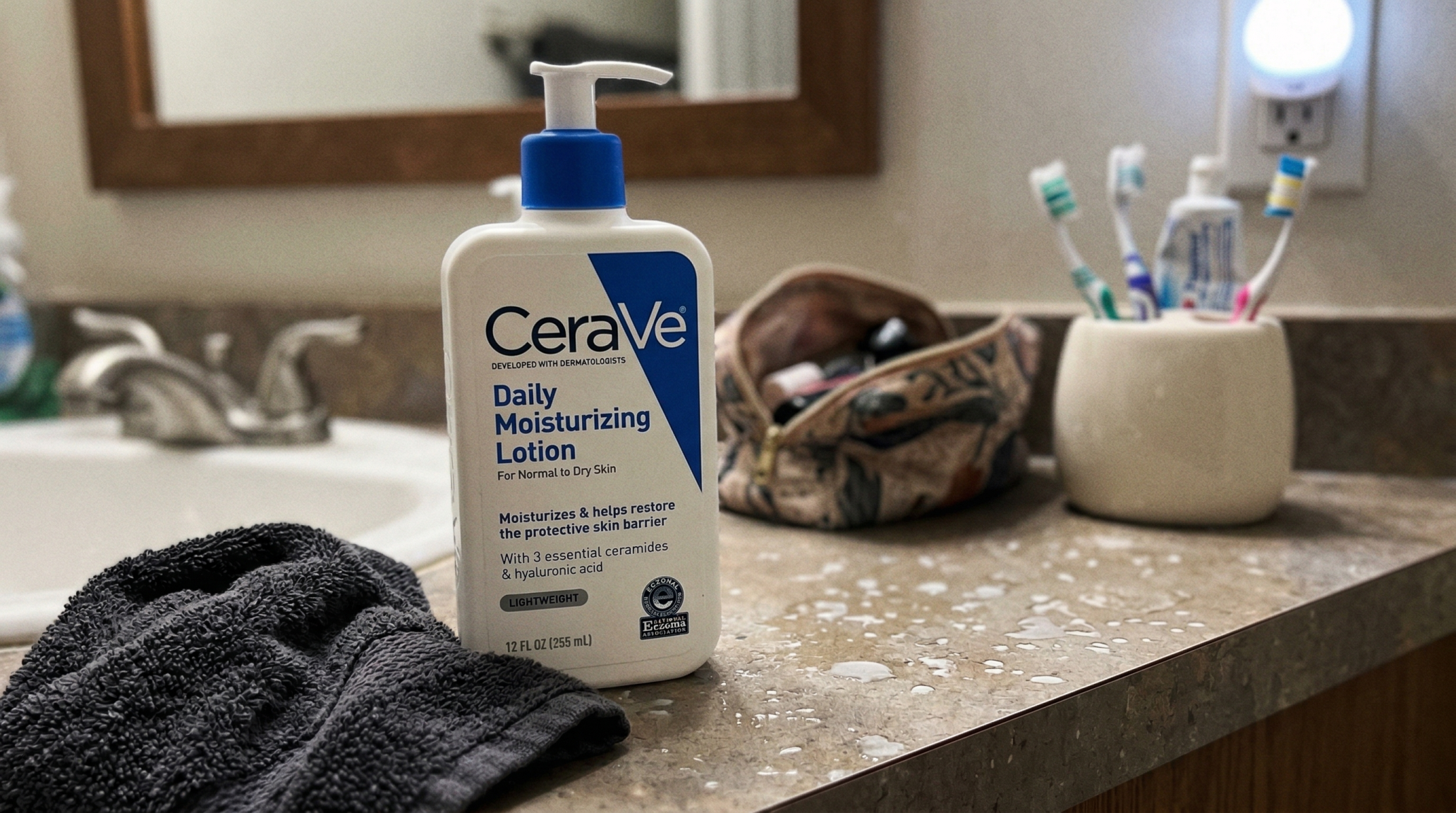
What to use instead: a fragrance-free, oil-free body lotion. CeraVe Moisturizing Lotion, Lubriderm Daily Moisture, and Jergens Original Scent are common options that tend to work well with spray tans. These are examples of the format that works. Any similar oil-free, fragrance-free formula without heavy emollients will do the same job. The key is checking that mineral oil and coconut oil are not in the first five ingredients.
Exfoliating body washes and scrubs
Body washes with exfoliating beads, sugar, salt, or chemical exfoliants like glycolic or lactic acid tend to speed up the surface cell turnover that fades color. Physical scrubs can be more immediately noticeable because they manually lift surface cells. Chemical exfoliants work more gradually but can have a similar effect over several days.
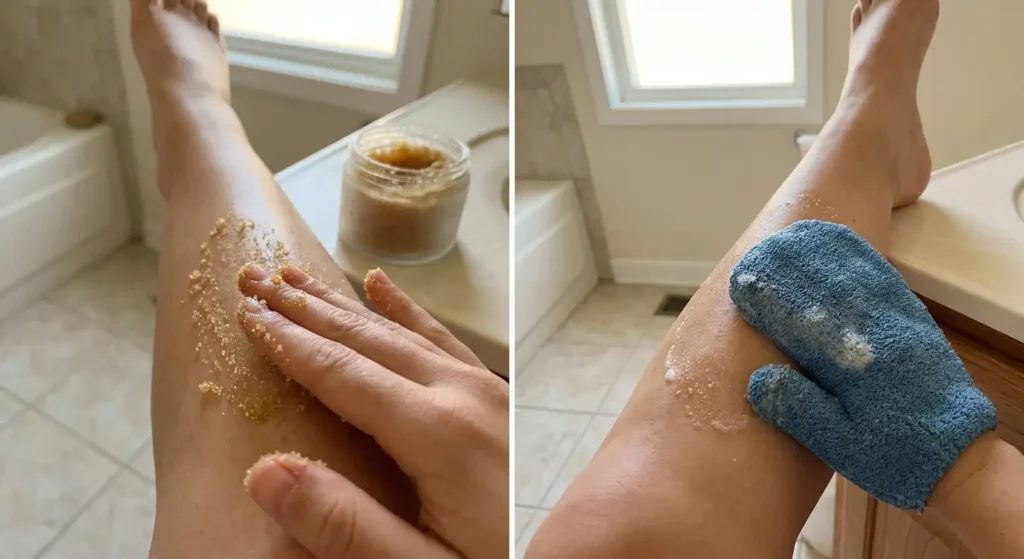
The issue is that many body washes with “smoothing” or “brightening” on the label contain one or both of these. A wash marketed as hydrating can still carry lactic acid as a secondary ingredient. Checking the ingredient list rather than the front-of-pack claim is the more reliable approach.
What to use instead: a plain, sulfate-free body wash without exfoliating actives. Dove Sensitive Skin Body Wash, Cetaphil Gentle Cleansing Bar, and CeraVe Hydrating Body Wash are frequently mentioned in spray tan aftercare as formats that tend not to interfere with color. Any similar gentle formula without exfoliating actives works the same way.
Products with alcohol
Alcohol evaporates on contact and can pull surface moisture with it. In the context of a spray tan, that moisture loss may accelerate the surface cell shedding that fades color. Alcohol appears most often in toners, setting sprays, some body mists, and certain gel-based moisturizers.
The version most associated with this effect is denatured alcohol, listed as “alcohol denat.” on ingredient labels. Fatty alcohols like cetyl alcohol and stearyl alcohol behave differently and are not typically associated with this problem. The ingredient list matters more than the word “alcohol” appearing anywhere on the packaging.
What to use instead: alcohol-free toners and unscented body lotions without alcohol denat. in the formula. For the face during the maintenance window, a simple hyaluronic acid serum without alcohol tends to be the easiest swap.
Retinol and strong leave-on actives
Retinol speeds up cell turnover as its primary function, which makes it directly at odds with spray tan maintenance. Using it daily during the week after a spray tan is commonly associated with a noticeably shorter visible lifespan for the color.
The same applies to high-percentage AHA and BHA products used as leave-on treatments. A gentle glycolic toner applied daily can cause more cumulative fading over a week than a single exfoliating scrub session.
What to do: consider pausing retinol and strong leave-on actives during the spray tan period and resuming the day after the tan has fully faded and been exfoliated off. This is the one category where substitution is less straightforward than simply switching formulas.
Bar soaps with high pH
Traditional bar soaps tend to have a higher pH than the skin’s natural surface, which can interfere with the slightly acidic environment where DHA color holds most effectively. Repeated use during the maintenance window is sometimes associated with faster fading, particularly on areas like elbows, knees, and ankles where color tends to go first anyway.
This is a less significant factor than the categories above, but worth knowing if you prefer bar soap and notice spray tans consistently fading faster or more patchily than expected. Switching to a pH-balanced liquid cleanser for the duration of the tan is a straightforward adjustment.
Habits that tend to shorten a spray tan
Long hot showers. Hot water can strip the surface layer faster than lukewarm water. The longer and hotter the shower, the more accelerated the fading tends to be. Keeping showers short and at a lukewarm temperature is one of the most impactful daily habit adjustments for spray tan longevity.
Rubbing with a towel. Rubbing dry after a shower creates friction on the surface layer where color lives. That friction can lift surface cells unevenly, which is where the patchy-fade pattern that looks worse than gradual fading tends to come from. Patting dry takes about the same amount of time and typically produces a more even fade.
Swimming pools. Chlorine can break down DHA color. A swim in a chlorinated pool in the first three days is commonly associated with significant color loss, particularly on shoulders and upper back. If swimming is unavoidable, applying a waterproof barrier lotion before and rinsing immediately after limits the exposure.
Tight clothing directly after the appointment. In the first few hours after a spray tan, the solution is still developing and the cosmetic bronzer layer can transfer onto fabric. Tight waistbands, bra straps, leggings, and sock edges can leave marks in fresh color. Loose, dark clothing for the first few hours reduces contact transfer during development.
What actually helps the color last
Fragrance-free, oil-free body lotion applied daily is the baseline. Applied while skin is still slightly damp after a shower, it absorbs more effectively and helps maintain the surface layer that holds color.
A gradual tanning lotion used from day three or four can help maintain color depth as the natural tan starts to fade. The best gradual tanning lotion article covers which formulas build color without a noticeable self-tanner smell during daily use.
For the full day-by-day timeline of how a spray tan develops and fades, the how long does spray tan last guide covers what to expect at each stage. And for how to set up the skin before the appointment so the color develops as evenly as possible from the start, the prepare skin for self tanning guide covers the prep sequence that makes the most difference.
If your spray tan is fading faster than expected, it is almost always tied to one of these product categories rather than the tan itself.
Quick view Table
| Category | What tends to accelerate fading | Consider using instead |
|---|---|---|
| Moisturizer | Mineral oil, coconut oil, heavy emollients | Oil-free fragrance-free body lotion |
| Body wash | Exfoliating beads, glycolic acid, lactic acid, high-pH bar soap | Sulfate-free gentle liquid wash |
| Skincare actives | Retinol, AHA, BHA leave-on treatments | Consider pausing for duration of tan |
| Products with alcohol | Alcohol denat. in toners, mists, gels | Alcohol-free alternatives |
| Daily habits | Long hot showers, rubbing dry, pool swimming, tight clothes post-appointment | Short lukewarm showers, pat dry, barrier lotion before swimming |
The most asked questions
Oil-based moisturizers, products with mineral oil or coconut oil, and anything containing exfoliating acids like glycolic or lactic acid are commonly associated with faster fading. Alcohol-based toners and retinol products also tend to shorten color. A fragrance-free, oil-free body lotion without exfoliating actives is the safer format for the maintenance window.
CeraVe Moisturizing Lotion tends to work well for spray tan aftercare because it is oil-free, fragrance-free, and contains no exfoliating actives. The Moisturizing Lotion version is the one most consistent with spray tan aftercare. The CeraVe SA Smoothing formulas contain salicylic acid, so those are better saved for after the tan has faded.
Coconut oil is commonly associated with faster color loss despite being marketed as natural and gentle. It tends to move through the surface layer where DHA color lives rather than sitting on top of it. Most spray tan aftercare guidelines suggest avoiding it for the duration of the tan.
A plain, oil-free body lotion can typically be used from the day after the first post-tan shower. Oil-based formulas and leave-on exfoliating actives are worth avoiding for the full duration of the tan. Once the tan has fully faded and been exfoliated off, returning to the regular routine is fine.
Peta Jane Self Tanner Review: Does the Allure-Winning Mousse Actually Deliver?
GlowDrop Review: Do Drinkable Tanning Drops Actually Work?
Self-Tanner on Tattoos: How It Changes the Look of Healed Ink
How to Self-Tan Hands Without Orange Knuckles
Cyklar Self-Tanning Milky Essence Review: Who Is It For?
Melanotan II vs DHA Self-Tanner: What the Barbie Peptide Gets Wrong