
Jergens Natural Glow Review: Honest Take on the Budget Gradual Tanner

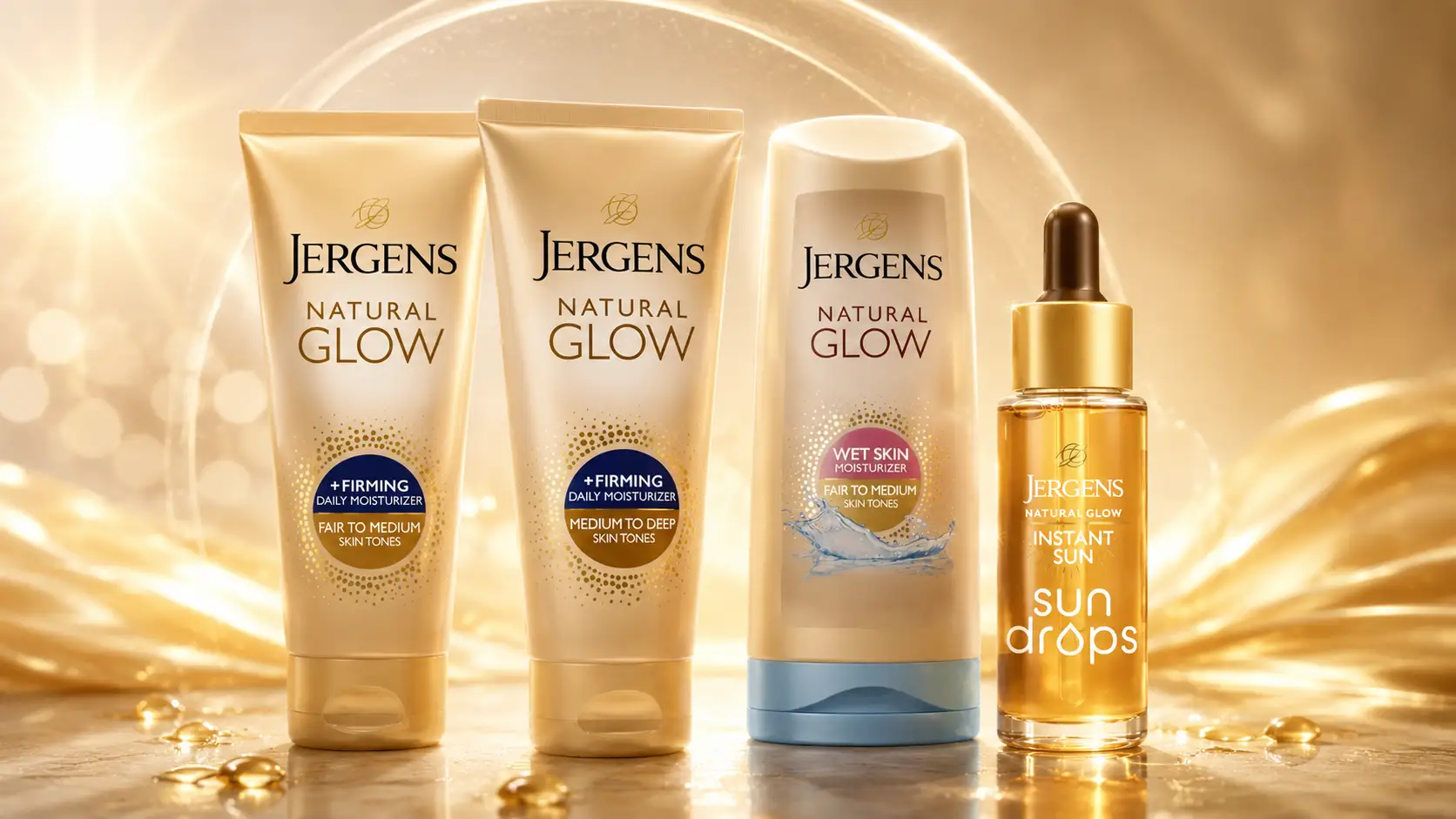
Eight dollars, applies like a lotion, turns up on every budget gradual tanner list that has ever been written. The question is not whether Jergens Natural Glow works — it does — but whether what it does is what you are actually looking for.
I have used it across multiple summers. My answer is more nuanced than the five-star reviews and the one-star horror stories suggest. It earns its popularity with beginners. For experienced tanners expecting deep, fast color, it will probably leave them underwhelmed.
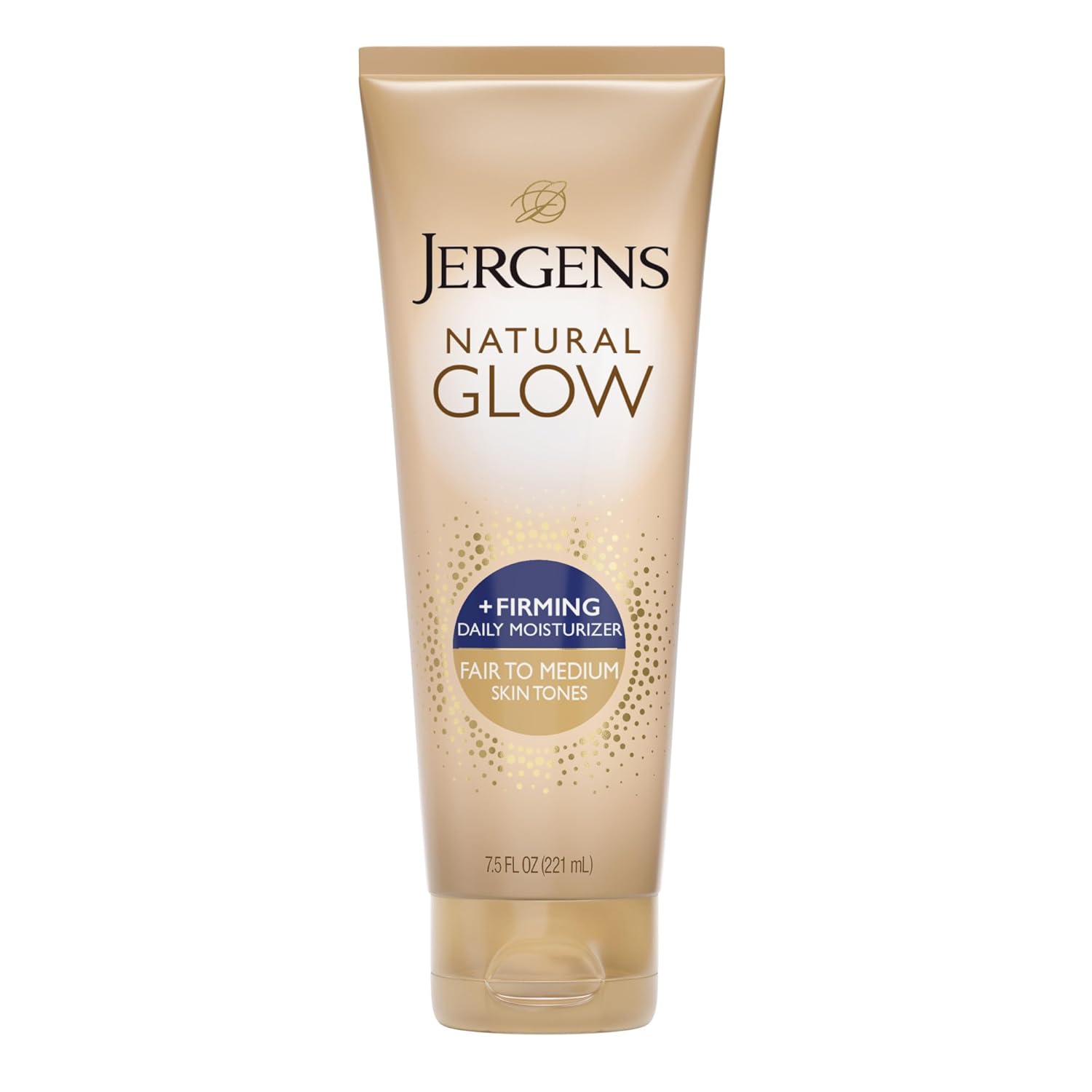
Jergens Natural Glow Self Tanner Body Lotion
Jergens Natural Glow is a low-DHA gradual tanner that builds subtle color over 3 to 5 days of daily use. At around $8 for a 7.5 oz bottle, it delivers even, natural-looking warmth for fair to medium skin tones. It is not the product for deep color or quick results.
What Jergens Natural Glow does well
The formula is genuinely forgiving. Low DHA means first-timers who apply unevenly or skip exfoliation are unlikely to end up streaky. Color develops slowly, which means application mistakes show up as a slightly uneven glow rather than orange patches. That built-in forgiveness is the main reason this product has loyal users who have repurchased for a decade.
Texture is another advantage. Thick enough to feel like a real moisturizer, not watery the way some self-tanners feel, and it absorbs without leaving a sticky film. Scent is light and slightly floral, with very little of the typical DHA biscuit smell that clings to cheaper formulas after they develop. For a product used every morning, that matters more than people admit when buying it.
Hydration is a real benefit here, not just a marketing claim. The formula contains vitamins C and E alongside glycerin, and most people notice softer skin after a week of daily use. One product doing two jobs makes it easier to stay consistent, which is most of the reason it works at all.
Where it falls short
The color ceiling is low. If you are expecting the kind of result you get from a self-tanning mousse or concentrated drops, this product will not get you there. Three to five days of daily use gives you a shade or two of warmth, not a sun-kissed statement. People who stop using it after reaching their target often find that color fades back to baseline within four to five days.
Dry skin spots collect color differently than the rest of the body. Knees, ankles, and elbows absorb more DHA and go noticeably darker than surrounding skin if you skip moisturizing those areas first. Elbows are the worst offender. The formula is richer than most and tends to sit longer in textured spots before absorbing. Exfoliate those areas before the first application and apply less product directly to them on every use.
Apply a thin layer of plain unscented lotion to elbows, knees, and ankles 20 minutes before Jergens Natural Glow. The barrier slows DHA absorption and keeps those spots from going two shades darker than your shins.
The Jergens Natural Glow product line
The brand sells several versions under the Natural Glow name, and they behave differently enough to be worth knowing before you buy. The bottle designs look similar in the store, which leads to a lot of confused repurchases.
Jergens Natural Glow Daily Moisturizer
Jergens Natural Glow Self Tanner Body Lotion
This is the baseline product and the one most reviews reference. It comes in Fair to Medium and Medium to Tan. The difference between the two is real: the Medium to Tan version develops noticeably faster and can read orange on lighter skin tones when used daily without a break. Fair to Medium is the safer starting point for anyone who would describe their natural skin as light or pale.
Jergens Natural Glow + Firming
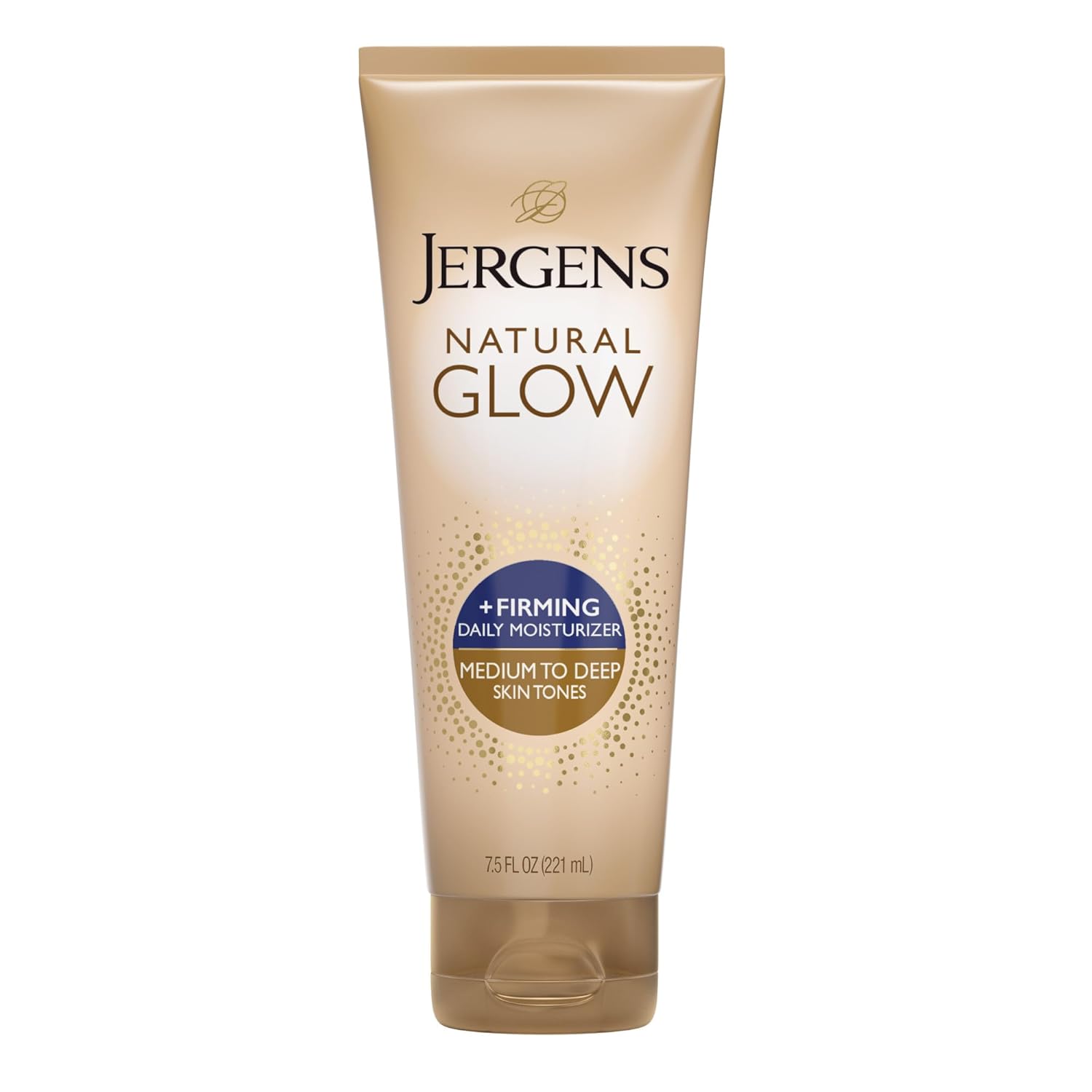
Jergens Natural Glow + Firming Daily Moisturizer Medium to Tan Skin Tones
This version adds collagen and elastin to the formula alongside the DHA. The tanning behavior is identical to the original. Whether the firming ingredients do anything meaningful at this concentration is unclear, and the label does not make specific efficacy claims. Buy this one for the tan, not the firming effect. The price difference between this and the original is small enough that most people end up with whichever one is in stock.
Jergens Natural Glow Wet Skin Moisturizer

This version applies directly to wet skin right after the shower, before you pat dry. The idea is that moisture helps spread the formula and speeds absorption across the body. Color builds slightly faster than the original in my experience. The tradeoff is transfer: the wet-skin formula is more likely to come off on towels and bed sheets before it has fully set. Give it five minutes before touching fabric or dressing.
Jergens Natural Glow for Face
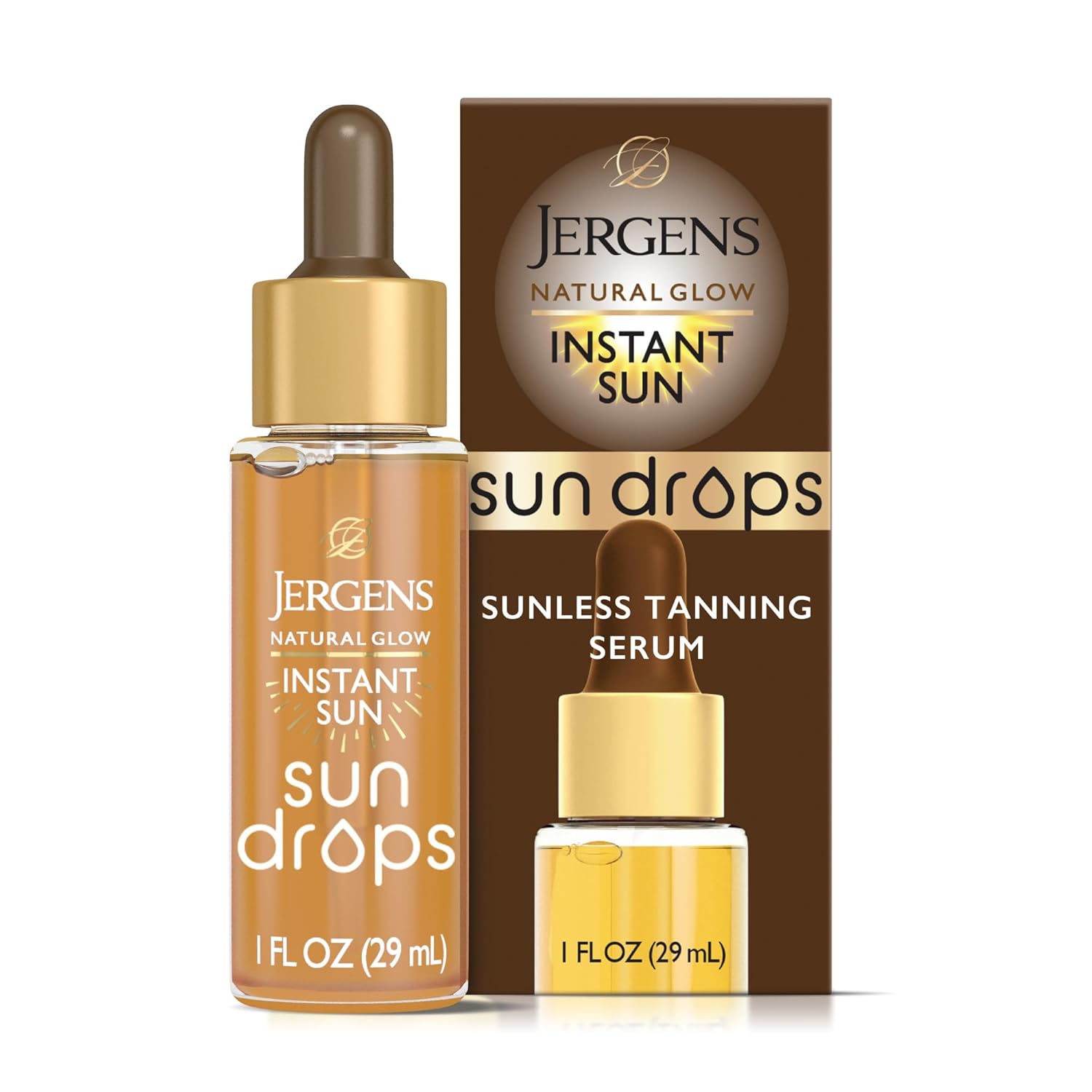
Jergens Natural Glow Instant Sun Drops, Sunless Tanning for Face
A lighter-texture reformulation with lower DHA, designed for the face specifically. It spreads more evenly across the nose, cheeks, and forehead than the body formula, which is too rich and heavy for most facial skin. If you want a natural flush of warmth on your face without switching to a dedicated tanning drop, this is a reasonable option at the same price point as the body version.
Jergens Natural Glow Hydra Gel

The Hydra Gel is the newest addition to the Natural Glow line. The gel texture is lighter than the classic lotion, absorbs faster, and leaves no residue. The hyaluronic acid addition means it works as a hydrator in its own right, not just a tanner with moisturizer as a bonus. Color build time is similar to the Daily Moisturizer. If the richness of the original feels heavy or slow-absorbing on your skin, this is the version worth trying.
Who should use it (and who should not)
Good fit
Good match for beginners, fair-skinned people who want a hint of warmth, and anyone maintaining a baseline tan between higher-impact applications. The weeks leading up to a vacation are a natural use case: start building color before reaching for a mousse or drops closer to the date. First-time self-tanners will also find this the easiest way to see how their skin handles DHA without committing to a more intense formula.
Not the right product if
Medium or deeper skin tones wanting visible color change will find it underwhelming. One or two applications will not get you there. Building past a light golden tone is not realistic with this formula either. In those cases, a self-tanning mousse or concentrated drops will get there faster with more control over depth. On build speed and color intensity, Jergens is not in the same category as Bondi Sands or a dedicated self-tanner.
- Forgiving formula with low streaking risk even without perfect prep
- Absorbs like a regular body lotion without sticky residue
- Light scent with minimal DHA smell during development
- Doubles as a moisturizer, so one less step in a morning routine
- Available at every drugstore and mass retailer for under $10
- Color ceiling is low; not suitable for anyone wanting deep or fast results
- Needs daily maintenance and color fades within 4 to 5 days of stopping
- Knees and elbows collect color unevenly without careful prep
- Medium to Tan shade can read orange on very light skin tones
- Contains fragrance; not suitable for reactive or very sensitive skin
Jergens Natural Glow Self Tanner Body Lotion
How to apply Jergens Natural Glow for the best result
The formula is forgiving, but where it tends to go wrong is predictable. Two minutes of prep before the first application makes a real difference in how evenly color develops.
-
Exfoliate the day before
-
Moisturize problem spots first
-
Apply like a lotion, not a self-tanner
-
Use daily for 3 to 5 days to build color
-
Wash hands immediately after full-body application
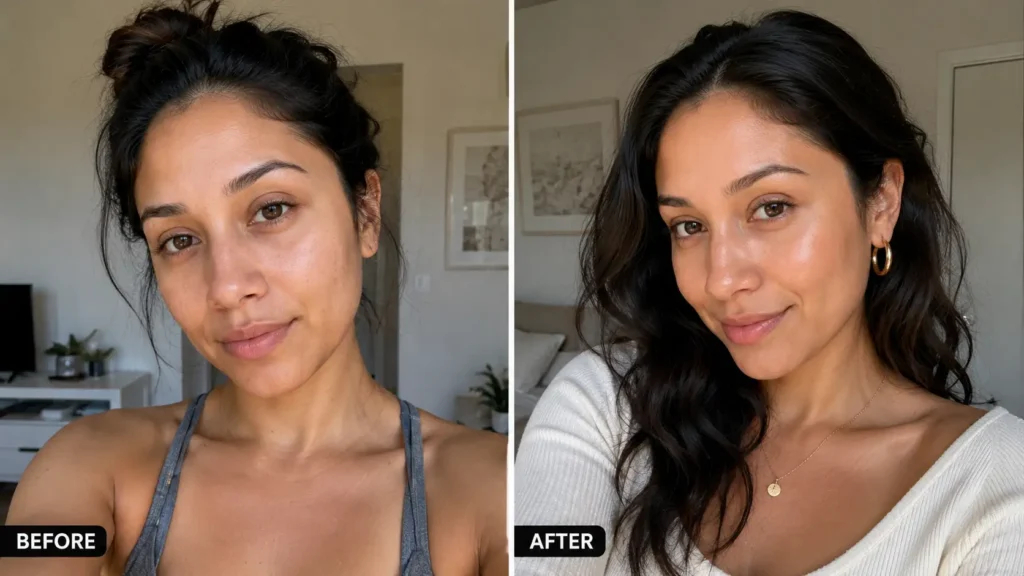
Jergens Natural Glow before and after: what to expect each day
The biggest source of disappointment with this product is expecting visible color change on day one. Nothing happens on day one. That is by design, not a sign that it is not working.
Day 1 to 2: no visible color change. Day 3: first hint of warmth, skin looks slightly sun-touched. Day 5: one to two shades darker than your baseline, most noticeable on legs and arms. Day 7 with daily use: color is at its peak for this formula. After stopping: fades evenly over 4 to 5 days back to your natural tone.
Color peaks around day five to seven of daily use. After that, continuing daily use maintains the color rather than building more depth. More layers do not help: the formula does not carry enough DHA to push past its ceiling no matter how many applications you stack.
How skin tone changes the result
Fair skin shows the color shift clearly by day three. Medium skin tones see less contrast, and the result reads more as warmth than as visible tan color. The formula was designed for the fair-to-medium range, and that is where it performs. Expecting a dramatic before and after on medium or deeper skin will lead to disappointment.
How Jergens compares to other gradual tanners
At this price point, nothing beats Jergens on formula feel and ease of use. The texture is better than most sub-$10 gradual tanners, the scent is genuinely pleasant, and the color is consistent on well-prepped skin. Where it loses ground is against tanners that cost more and deliver more. Bondi Sands builds deeper color faster and holds it longer. The options in the self tanner with moisturizer roundup can bridge the gap between daily hydration and visible tan depth more effectively than Jergens does.
Skip it if you want real color depth, or a result that holds without daily upkeep. For low-commitment warmth that does not require precision, it is hard to argue against the price.
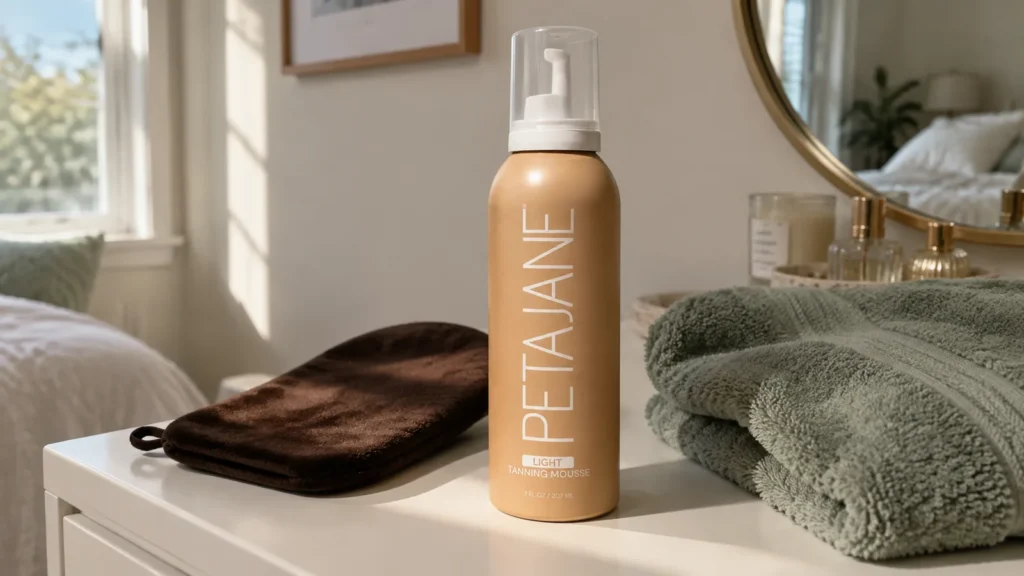
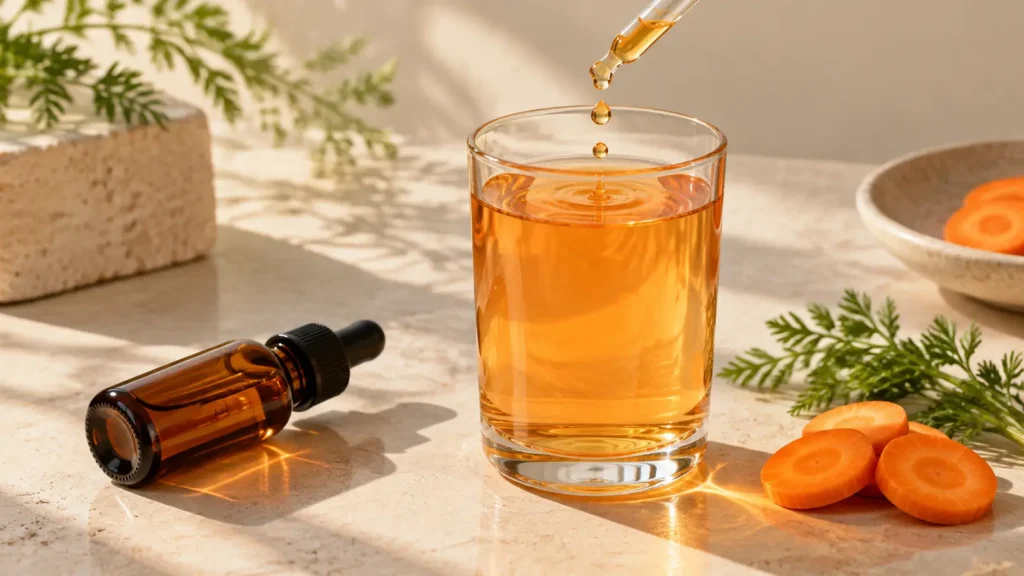
Jergens Natural Glow builds 1 to 2 shades of warmth over 3 to 5 days of daily use. Self-tanning mousse typically builds 2 to 4 shades in one overnight application. Tanning drops concentrate DHA and can be mixed into moisturizer for a customizable daily dose. Jergens is the easiest to use and the lowest commitment; mousse and drops produce stronger results but require more careful application.
- Low DHA means less risk of streaks and orange tones. The most beginner-friendly gradual tanner available at this price.
- Builds 1 to 2 shades of warmth over 3 to 5 days; not suited for deep color goals
- Prep the problem spots before first use and the result stays even
- The face formula and wet-skin version behave differently from the original and are worth knowing about
Jergens Natural Glow is a genuinely good beginner self-tanner and a solid choice for anyone who wants low-maintenance warmth rather than deep color. The formula is easy to use, the scent is pleasant, the texture absorbs cleanly, and the price makes it easy to test without committing to anything. For experienced tanners or anyone who wants visible results in fewer than three days, it will not deliver. But for what it is, which is a forgiving daily tanner that works like a moisturizer, it is hard to beat at the price.
ok so my roomate has been using st tropez gradual for two months and ngl her skin looks way more golden than mine and were literally doing the same thing?? im on jergens bc i thought it was basically the same deal but idk maybe not lol. is one actually stronger or does it just depend on the person
Yeah that’s not a you problem, the formulas are genuinely different. St. Tropez Gradual has more DHA so it builds more color, that’s just how it’s designed. Jergens is great for a first timer but there’s a ceiling on how deep it goes. If you want what your roommate’s getting, switching products is the answer.