
My 10-minute self-tan routine saves me at least 30 minutes every week.
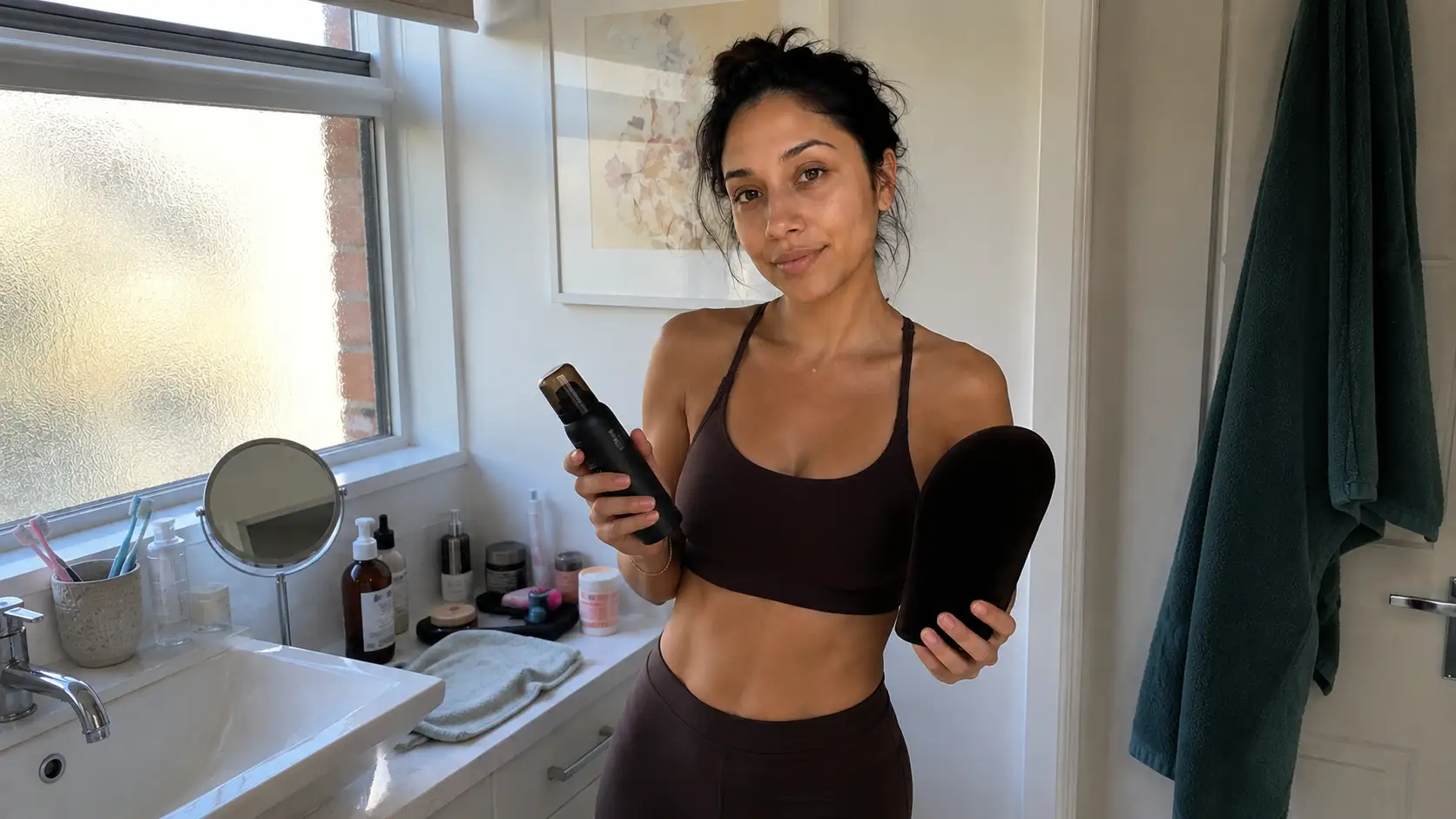
Three months ago I realized I was skipping self-tanner almost every week. Not because I did not want the color. I kept waiting for the perfect evening to do it. The problem was that the perfect evening never came.
After showing up to an event looking noticeably paler than I expected, I decided to see if I could make self-tanning fit into a normal workday morning instead. The first few tries were rough. I picked the wrong products, rushed the application, and walked out with streaks I spent the whole day trying to ignore. But I kept adjusting, and over time I found a combination that works without turning my morning into a production.
This is the routine I landed on. Ten minutes from shower to dressed, with the color I used to spend an entire evening chasing.
Why I Used to Avoid Morning Tanning
The main reason was drying time. I thought any self-tanner needed at least 15 minutes of standing still before I could put clothes on. And if I used a gradual lotion, I assumed it would feel sticky under my work clothes all day. Neither turned out to be true once I picked the right formulas.
The second reason was the mess. Applying tanning products in a rush felt like a disaster waiting to happen. Streaks on my elbows, product on my bathroom floor, orange palms. But most of that came down to technique and the right tools, not the time of day.
What changed was realizing that a morning tan does not need to be as thorough as an evening one. You are not building a week-long tan in one session. You are maintaining color, adding a layer, building gradually. The routine can be shorter because you are not starting from zero every time.
My 10-Minute Morning Self-Tan Routine
I have timed this more times than I care to admit. It runs about 10 minutes from the moment I step out of the shower to when I am dressed and walking away.
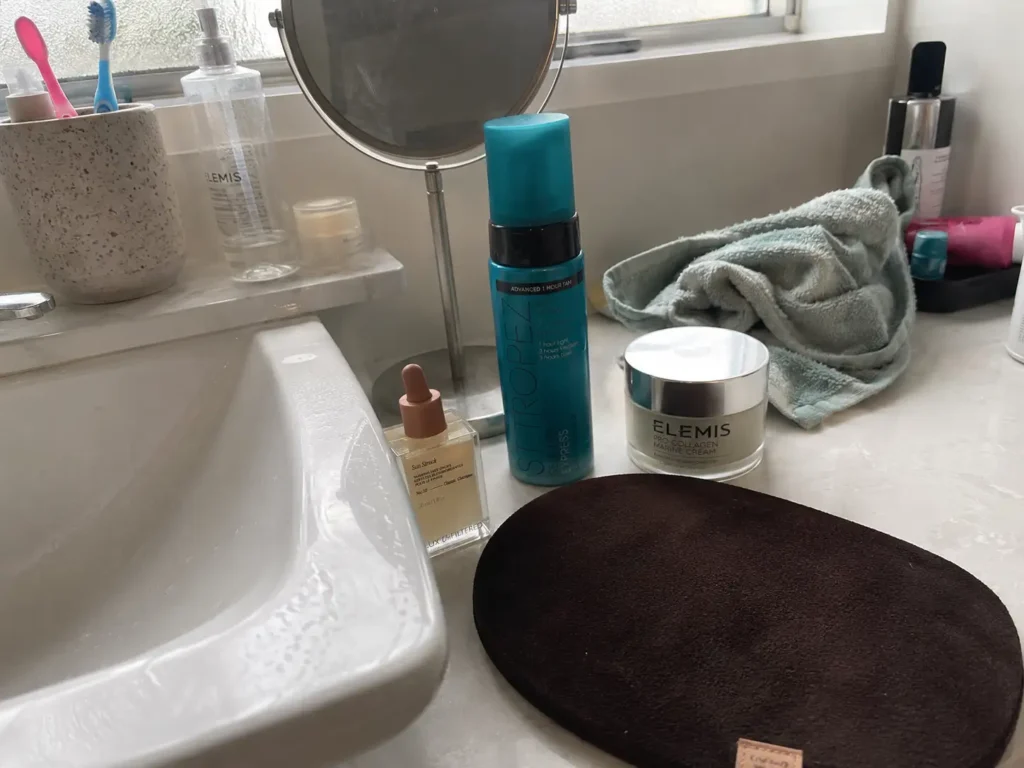
Minute 1 to 2: Quick Prep
I take my regular morning shower. Nothing special. I use my normal body wash. The only thing I pay attention to is rinsing off any leftover moisturizer or oil from the night before, because product buildup on the skin can block the tan from developing evenly. I pat dry with a towel, not rub, and I make sure my skin is fully dry before I start applying. Damp skin is the fastest way to get streaky results, and fixing streaks takes longer than waiting the extra 30 seconds to air dry.
Minute 3 to 5: Body Application
Product choice matters a lot here. I use a tanning mousse because it dries faster than lotions and does not leave that tacky feeling that makes you wait before getting dressed. I put a small amount on a mitt and work in sections: legs first, then torso, then arms. One layer, quick passes, no going back over areas unless I see a missed spot.
The mitt makes this whole thing possible. Without it, you add at least three minutes of hand-washing and scrubbing under your nails. With a good mitt, you blend as you go and you are done in one pass.
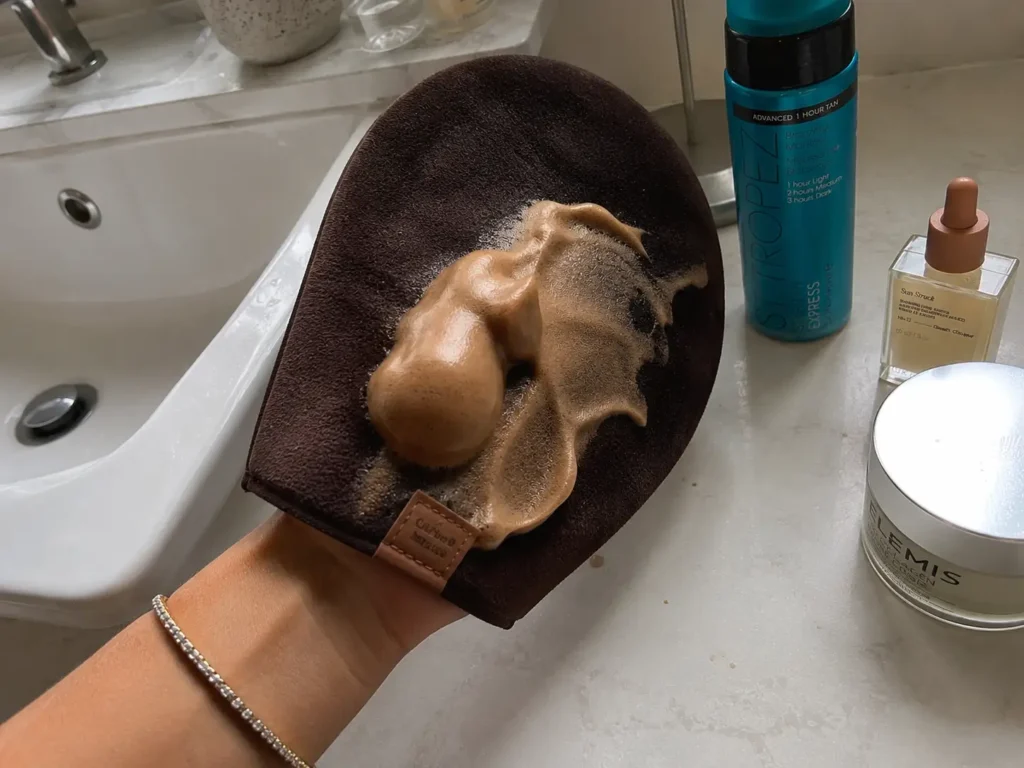
Minute 5 to 7: Face and Neck
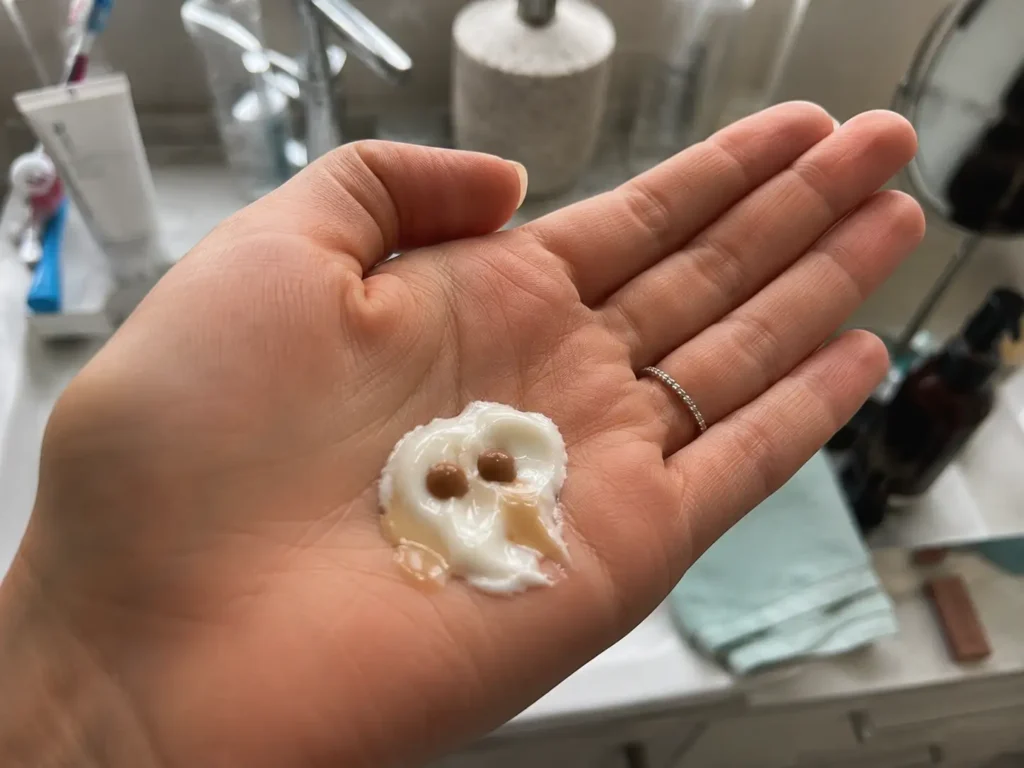
I use self-tanning drops mixed with my regular moisturizer for the face. This is faster than applying a separate face tanner and gives me more control over the depth. Two drops in my palm, mix with a pea-sized amount of moisturizer, and spread over my face and down my neck. The key is blending down past the jawline so there is no visible line between my face and body color.
Using drops instead of a dedicated face tanner means I do not have to wait for a separate product to dry. By the time I finish blending, the moisturizer has absorbed and I can move on.
Minute 7 to 8: Hands, Feet, and Tricky Spots
I take the excess product off the mitt and wipe it over the tops of my hands and feet. Not between the fingers or toes, just the tops. Then I use a damp cloth to thin out the product around my knuckles, ankles, and wrists. Those areas have drier skin and grab more color, so thinning them prevents that dark, patchy look that screams fake tan.
Minute 8 to 10: Dry and Dress
I stand in front of a fan for about two minutes. A small desk fan pointed at my body cuts the drying time in half. Then I put on loose clothing for the rest of the morning and avoid sitting on fabric for at least five minutes. By the time I grab my bag and keys, I am dry enough to move normally.
-
Minute 1-2: Shower and dry
Normal shower. Rinse off last night’s moisturizer. Pat dry and wait 30 seconds for full air dryness.
-
Minute 3-5: Body layer
Mousse on a mitt, one pass. Legs, torso, arms. Quick even layer, no second passes.
-
Minute 5-7: Face and neck
Two drops of tanning drops mixed into moisturizer. Spread face and neck, blend past the jawline.
-
Minute 7-8: Hands and tricky spots
Excess mitt product on tops of hands and feet. Damp cloth to thin knuckles, ankles, wrists.
-
Minute 8-10: Dry and dress
Two minutes in front of a fan. Loose clothing. Avoid sitting on fabric for five more minutes.
What Surprised Me Most
The biggest surprise was not the color. It was how much easier it became to stay consistent. A lighter tan applied regularly looked more natural than the deep color I used to chase once a week. I stopped obsessing over perfect application because the daily maintenance evened everything out over time.
Another thing I did not expect was how little the routine disrupted my morning. I kept waiting for it to feel like a chore, like squeezing in an extra errand before work. Instead it became a normal part of my rhythm. Shower, tan, dress, go. The whole thing runs on autopilot now.
The technical details mattered less than I thought. I used to stress about getting a perfect streak-free finish every time. But with consistent application, small imperfections evened out by the next session. The routine itself did the work that precision used to do.
The Three Things That Make This Routine Possible
I tried a lot of products before I found what actually works in a hurry. Thick lotions that stayed wet for 20 minutes. Sprays that left uneven patches. Gradual creams that pilled under clothes. After months of trial and error, I narrowed it down to three essentials.
A fast-drying mousse is the backbone of this routine. It spreads thin, dries in under five minutes, and does not leave a heavy layer on your skin. On days I want a lighter tan, I use a gradual lotion instead. It takes the same amount of time but builds over multiple mornings, so I can use it two or three days in a row without looking overdone.
A decent mitt is not optional. Without it you add hand-washing, nail scrubbing, orange palms. With one you blend in one pass and you are done. The mitt does more for speed than any product change ever did. I replace mine every few months because a worn-out mitt absorbs more product than it spreads, and that slows everything down.
Face drops mixed into my regular moisturizer took the guesswork out of matching face to body. Two drops in my palm, blend, done. No extra bottle, no separate drying time, no visible line at the jaw.
If you want to simplify further, a self-tanner with moisturizer built in can cut the routine even shorter. The trade-off is lighter results per application, so you need to use it consistently.
What I Skip in the Morning (and Why It Still Works)
My morning routine does not include exfoliation. I do that the night before, once or twice a week, depending on how my skin feels. Trying to exfoliate in the morning adds 5 to 10 minutes and leaves your skin more absorbent, which can lead to uneven color if you rush the application. Save exfoliation for a separate time.
I also skip the full shave before applying. If I need to shave, I do it the night before so any micro-cuts or irritation have time to calm down. Shaving right before tanning is a recipe for dotted, uneven patches on your legs, and fixing those takes longer than the shave itself.
And I do not apply a second layer in the morning. The routine is one pass, one layer. If I want more color, I do another application the next morning. Trying to build depth in a single session takes time and raises the risk of streaks. Slow and consistent beats rushed and uneven every time.
What My Results Looked Like After 30 Days
After four weeks of following this routine two to three times a week, my color looked noticeably more even than when I relied on occasional full applications. The tan was lighter, but it never completely disappeared between sessions. That alone made a bigger difference than I expected.
The time investment was about 80 minutes total over the month. That is roughly what I used to spend on two full evening sessions. Instead of two dramatic tans that faded fast, I had consistent color for the whole month. I will take that trade every time.
What did not improve was the finish on dry areas. My elbows and knees still grabbed more product than the rest of my body. I learned to thin those spots with a damp cloth before the tan developed. Not a perfect fix, but good enough that nobody else would notice.
When the 10-Minute Routine Falls Short
This routine is not for every situation. If I have a special event or I want a deeper, more polished tan, I still do the full evening process. The quick morning routine is for maintenance and everyday color. If you are starting from zero and want a dramatic change, give yourself a proper session on a weekend or a free evening.
It also does not work as well if you have very dry skin. Dry patches absorb more product and can look darker than the rest of your body. If that is your case, spend an extra minute applying an oil-free moisturizer to your elbows, knees, and ankles before the tanner. That extra step takes the routine to about 12 minutes, but it makes a visible difference.
The short version: use products that dry fast, apply with a mitt in one even layer, and do not try to cram all the prep into the same morning. Do it consistently and you will have better color than trying to get it perfect once a week.
Peta Jane Self Tanner Review: Does the Allure-Winning Mousse Actually Deliver?
GlowDrop Review: Do Drinkable Tanning Drops Actually Work?
Self-Tanner on Tattoos: How It Changes the Look of Healed Ink
How to Self-Tan Hands Without Orange Knuckles
Cyklar Self-Tanning Milky Essence Review: Who Is It For?
Melanotan II vs DHA Self-Tanner: What the Barbie Peptide Gets Wrong