
Types of Tanning Bed Lotion: What Each One Does to Your Tan
Walk into any salon and the person at the counter will ask what lotion you want. Most people either grab whatever’s cheapest or say “whatever you recommend” and end up with something that doesn’t match where they are in their tanning routine. The three main types (accelerator, bronzer, and tingle) do different things at different stages. Getting that wrong doesn’t ruin your tan, but it does waste sessions.
What Tanning Bed Lotion Does to Your Color
Your skin responds to UV by producing melanin. Dry, rough texture absorbs that UV unevenly, so sessions on unprepared skin produce patchy, lighter results than the same time on hydrated, conditioned skin. Lotion fixes that by preparing the surface so UV hits it consistently. It’s not creating color. It’s creating the right conditions for your body to produce it.
That baseline job is the same across all three types. What changes is whether they also add pigment, trigger a chemical reaction with your skin, or push circulation to amplify the UV response. How UV works on your skin explains the full mechanism if you want to understand why surface condition changes the result that much.
The Three Main Types of Tanning Bed Lotion
Here’s a quick reference before going into the detail of each one:
| Type | How It Works | When to Use It | Color Timing |
|---|---|---|---|
| Accelerator | Stimulates natural melanin production | First 4-6 sessions, no base yet | 24-48 hrs after session |
| Bronzer | Adds cosmetic pigment + DHA reaction | Once you have a visible base | Immediate + 4-8 hrs (DHA) |
| Tingle | Increases surface circulation via vasodilation | Advanced tanners with solid base | During session, enhanced by UV |
Accelerators: Build Your Base Before Anything Else
An accelerator is the simplest formula of the three. No added pigment, no chemical reaction with your skin. It hydrates the surface and delivers ingredients like tyrosine, an amino acid involved in the natural melanin production process, to help your skin respond more fully to UV during the session.
The color doesn’t show up immediately. Results from an accelerator develop 24 to 48 hours after the session, not right after, and build gradually across 3 to 5 sessions. That’s intentional. What you’re building is real melanin depth, not surface pigment that rinses off. The color holds longer and looks more even than anything you’d get by jumping straight to a bronzer.
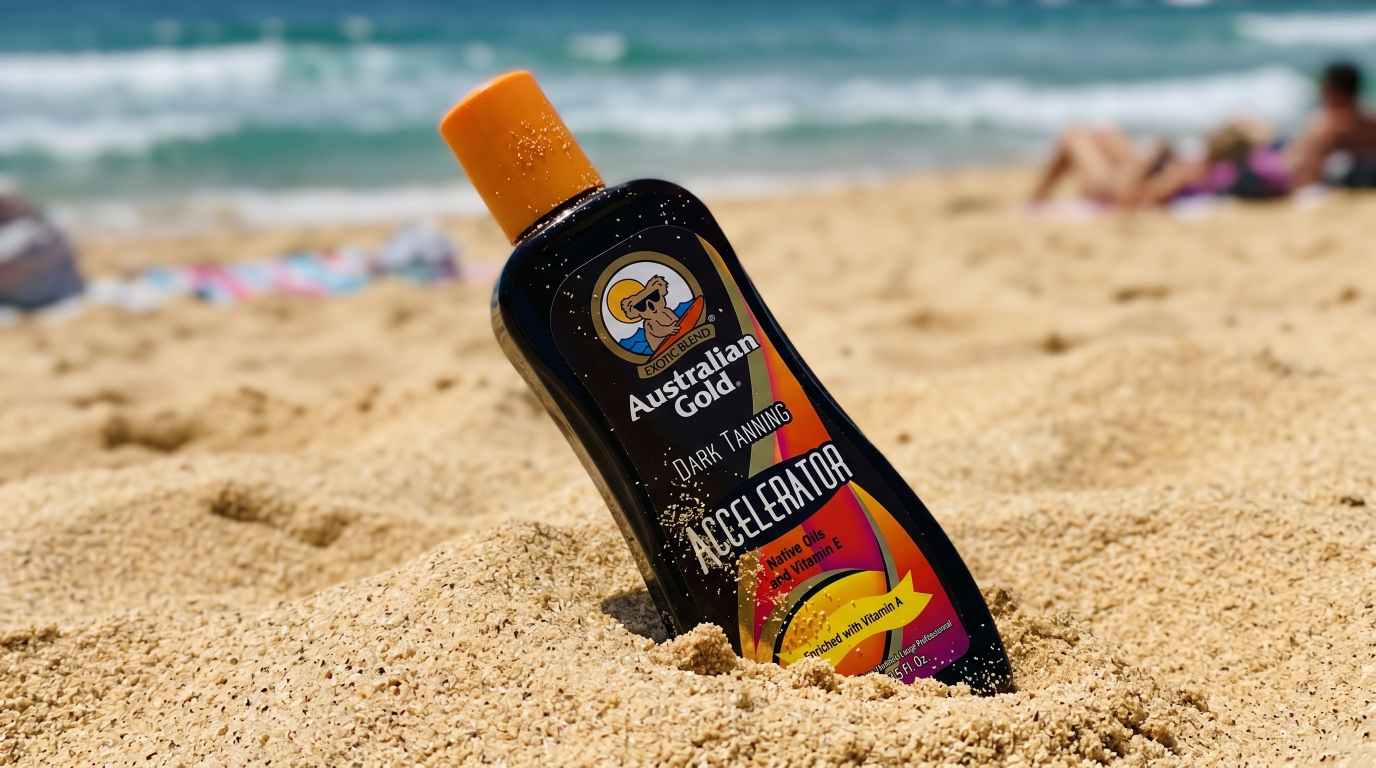
Australian Gold’s Dark Tanning Accelerator is one of the most-used options in U.S. salons for exactly this reason: no bronzer, no DHA, just the Biosine Complex keeping skin conditioned and receptive throughout the session. It’s the baseline formula the brand built its reputation on.
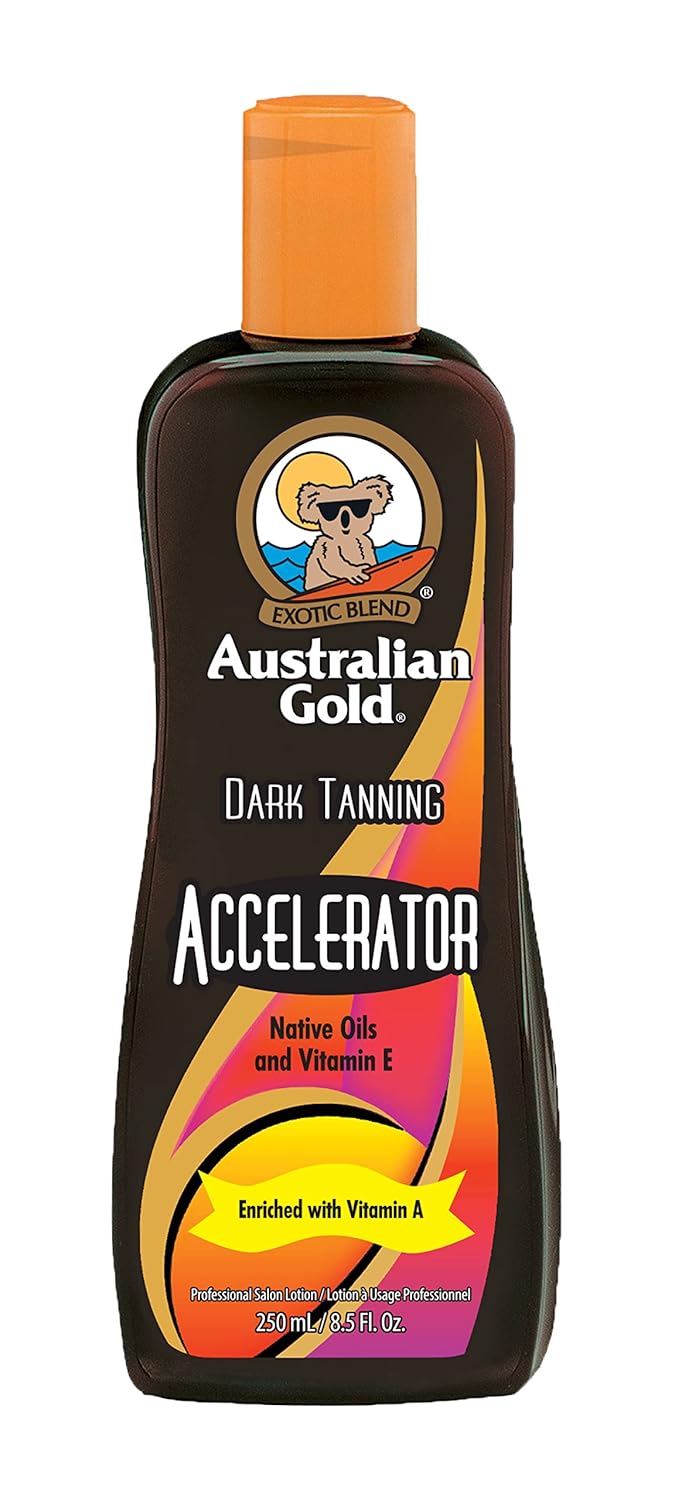
Australian Gold Dark Tanning Accelerator Lotion
The most common mistake with accelerators: one session, no visible result, switch to a bronzer. The melanin response was building. Switching mid-process means starting over. Stay with an accelerator for at least 4 sessions before judging the result. Once you have consistent color that holds for more than a couple of days, that’s when a bronzer starts making sense.
Bronzers: Immediate Depth With a Second Phase Coming
Bronzers do two separate things and most people only know about one of them.
The first is immediate: cosmetic pigment that sits on the surface and gives you visible color right out of the booth. It rinses off in the shower. The pigment shows you where the real color will develop. It’s not the result itself.
The second is DHA (dihydroxyacetone), a compound that reacts with amino acids in the outermost layer of your skin and produces color that develops over the 4 to 8 hours following the session. That’s why a bronzer tan looks deeper by the time you go to bed than it did when you walked out of the salon. The DHA reaction is still running. Showering too soon cuts it short.
Within bronzers, there are three sub-formats:
| Sub-type | Immediate Color | Lasting Depth | Best For |
|---|---|---|---|
| Cosmetic only | Yes (washes off) | No | Same-day results, one-off occasions |
| DHA only | No | Yes (develops 4-8 hrs) | Natural-looking depth, no immediate color |
| Combination | Yes (washes off) | Yes (DHA develops after) | Most everyday salon use |
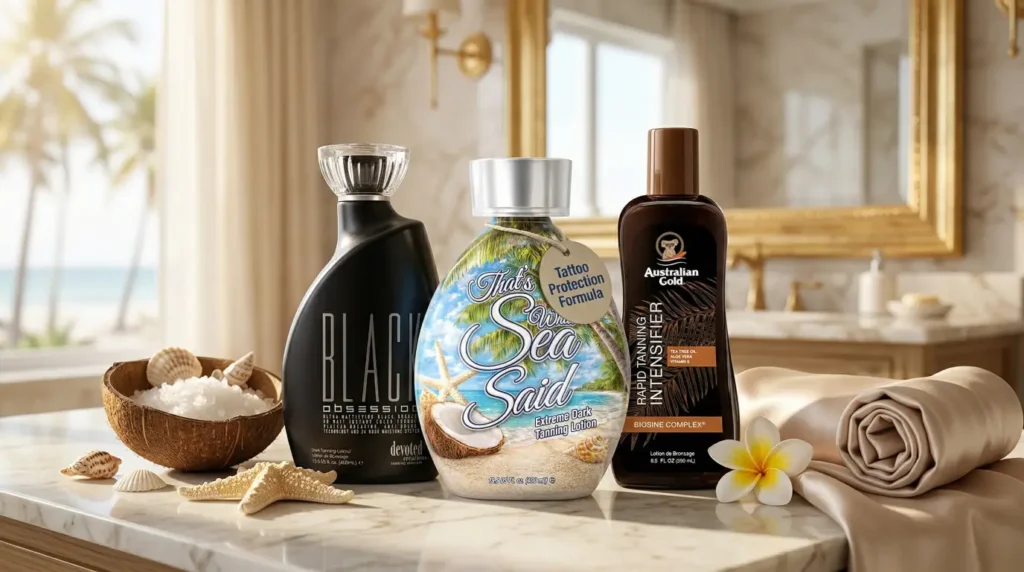
Combination bronzers are what you’ll find most often. Devoted Creations’ Vault formula uses encapsulated DHA that releases gradually, which extends how long the color development continues post-session. Designer Skin’s Dark Matter is another combination bronzer with a strong following in U.S. salons for deeper base tones.
The two most common complaints about bronzers (“it went too dark” and “I got streaks”) both trace back to the same cause: too much product on dry zones where formula concentrates unevenly. Even application on prepped skin solves it before it starts.
One timing detail worth knowing: if you shower within two hours of a combination bronzer session, the cosmetic pigment comes off and the DHA hasn’t finished developing. You’ll see a lighter result than if you’d waited. The product didn’t fail. The timing was the variable.
Tingle Lotions: For Advanced Tanners With a Real Base
Tingle is a different category mechanically. The active ingredient, usually benzyl nicotinate, dilates the blood vessels at the surface of your skin. More circulation in that zone during UV exposure means more cellular activity and a stronger color response than the same session produces without it.
Swedish Beauty’s Pink Crush Tingle Intensifier combines benzyl nicotinate with vanillyl butyl ether, both working on surface circulation during the session. Millennium Tanning’s Solid Black 200X is a stronger option used by experienced tanners who want maximum depth from high-level beds.
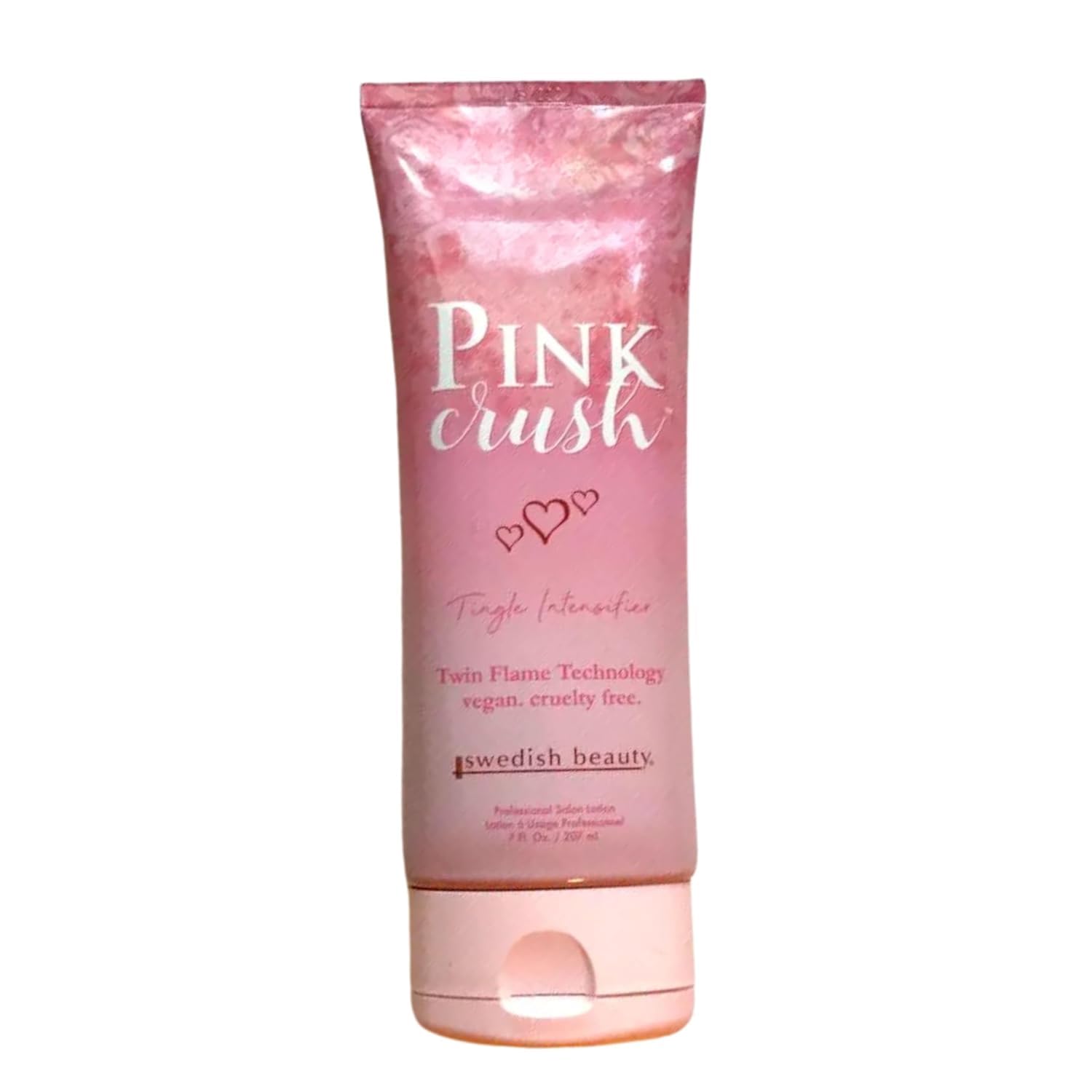
Pink Crush Tingle Intensifier Moderate Tingle
The sensation is heat, tingling, and temporary redness. It’s part of how the formula works, not a sign anything is wrong. The redness fades 30 to 60 minutes after the session as circulation returns to normal. What stays is the color that developed from the enhanced UV response.
The problem comes from using tingle too early. Without a real base built first, the vasodilation has little melanin capacity to work with. You end up with an intense sensation and underwhelming color payoff. Tingle is designed to push existing depth further, not build from zero.
How Your Bed Level Changes Which Type to Use
Most salons organize their beds from Level 1 to Level 4 or 5, with UV intensity increasing at each step. The lotion that makes sense depends directly on which level you’re using. The full breakdown of what changes between bed types is in the bronzing bed vs a regular tanning bed guide.
| Bed Level | UV Intensity | Best Lotion Type | Why |
|---|---|---|---|
| Level 1-2 | Moderate | Accelerator | Building base. Tingle wastes the sensation; bronzer gives mostly surface result at this UV level. |
| Level 3-4 | High | Bronzer | UV is strong enough for DHA and natural melanin to compound properly. |
| Level 4-5 / High-pressure | Very high | Tingle | High UV + increased circulation produces depth that a bronzer alone doesn’t reach at this stage. |
In Level 1 and 2 beds, accelerators are the right call. A tingle on Level 1 doesn’t have enough UV intensity to make the vasodilation worth the sensation. A bronzer can work, but the DHA component delivers more surface result than actual depth at these levels.
Levels 3 and 4 are where bronzers hit their range. UV intensity is high enough for the DHA and the natural melanin response to compound properly. If you’ve built a base and want more depth, this is the right bed-and-lotion pairing.
Level 4 and 5, including high-pressure beds, are where tingle formulas have a real reason to exist. The combination of high UV intensity and increased circulation produces color that’s genuinely deeper than what a bronzer achieves in the same session count.
If You’re Just Starting Out: Which Type to Pick First
Start with an accelerator. Stay there for your first 4 to 6 sessions.
Not because bronzers don’t work (they do), but because they work significantly better when there’s real melanin depth underneath them. A bronzer on bare skin gives you surface color that fades within days. The same bronzer on a built base gives you depth that holds. The base is what makes every session after it more efficient.
If it’s your first tanning bed session, an accelerator is the only type that makes sense at that stage. You’re not losing time by skipping a bronzer. You’re building the foundation that makes the bronzer worth using later.
The switch to a bronzer makes sense once you have consistent visible color after sessions and that color holds for more than a couple of days. At that point the DHA has real pigment to deepen and you’ll see the difference immediately. For a look at which specific products perform at each stage, the best tanning bed lotion for your skin level breaks them down by type and result.
After the Session: What the Lotion Can’t Do
Tanning bed lotion is a pre-session product. Once you’re out of the booth, it’s done its job. What happens in the next few hours determines how much of that color you actually keep.
If you used a bronzer with DHA, wait at least four hours before showering. Lukewarm water when you do. Hot water accelerates surface fade faster than almost anything else. After the skin cools down, apply a moisturizer or tan extender that’s free from alcohol, exfoliating acids, and mineral oil. Those three strip color faster than regular wear does.
The full post-session routine is in what to put on your skin after a tanning bed session. For specific product options that hold color rather than just market themselves as doing that, the right lotion after a tanning bed session covers what’s worth using.
Peta Jane Self Tanner Review: Does the Allure-Winning Mousse Actually Deliver?
GlowDrop Review: Do Drinkable Tanning Drops Actually Work?
Self-Tanner on Tattoos: How It Changes the Look of Healed Ink
How to Self-Tan Hands Without Orange Knuckles
Cyklar Self-Tanning Milky Essence Review: Who Is It For?
Melanotan II vs DHA Self-Tanner: What the Barbie Peptide Gets Wrong