
GlowDrop Review: Do Drinkable Tanning Drops Actually Work?
Short answer: GlowDrop’s tanning drops won’t give you a tan. The only ingredient with real pigment evidence behind it is beta-carotene, and at best that shifts your skin toward orange-yellow, not the bronze you get from a DHA self-tanner. I have not drunk GlowDrop, so this GlowDrop review is a researched one: its claims, its ingredients and the customer complaints around it, plus the topical drops I would use instead.
The TikTok pitch behind drinkable tan drops
Drinkable tanning drops are a 2026 phenomenon, and GlowDrop is the bottle that made the category. The pitch travels well on TikTok: a dropper bottle, a glass of water, a promise of a tan with no mitt, no smell and no streaks.
The category is also spreading. Amazon already carries copycat listings for “oral drinkable sunless tanning drops” from brands nobody has heard of, and GlowDrop itself warns buyers away from Amazon and eBay “fakes.” When a supplement format starts multiplying this fast, the claims usually outrun the evidence. That is exactly the moment to read the label instead of the ad.
What GlowDrop actually sells
GlowDrop is a dropper bottle of tanning drops marketed as “The Tan You Drink.” You add the drops to water or another drink once a day. One bottle is supposed to last a month, and the store page lists it at $30, marked down to $24 when I checked. The brand suggests choosing an “intensity,” which in practice means buying more bottles up front.
The listed actives are beta-carotene, L-tyrosine, vitamins A, B6, C and E, and minerals including copper and iron. The page claims “85K+ Glow Girls,” a 4.9-star rating, dermatologist approval and lab testing. Those are the brand’s own statements on its own store. The reviews on the site are screenshots, not a system I can audit, and the “85K+” figure cannot be checked from the outside.
The store also leans on urgency: a low-stock warning, a claim the product sold out 12 times last year, and a note to avoid “fakes” on Amazon and eBay. Meanwhile the stated timeline contradicts itself across the page. One section promises first changes in one to two weeks, another says subtle changes at two to four weeks and optimal results at eight to twelve, and a third talks about a “full transformation” at three to six months. A product that works on a clear mechanism should not need three different clocks.
The claims vs what the ingredients can do
The brand cites published studies on its product page, so I read the pitch the way I read any pitch: does the research test this product, or does it describe a pathway?
| Claim on the page | What the ingredient can realistically do |
|---|---|
| “Carotenoid accumulation” gives a warm, golden undertone | True, with a catch. Eating a lot of carotenoids does deposit pigment in skin. The documented result is a yellow-orange tint called carotenoderma, not a brown tan. |
| L-tyrosine “supports melanin production” for a real tan | Tyrosine is a building block of melanin, but drinking a precursor is not the same as your skin making more pigment. The studies linked describe melanin pathways; they do not test these drops on tanning. |
| Skincare from within, thanks to vitamins C and E | Vitamins C and E are normal skin-care nutrients. They do not tan you. |
| A tan that “doesn’t streak or wash off” | Any tint from carotenoids fades as your intake and skin turnover change. Even the brand says the glow fades within weeks if you stop. |
None of the three studies the page links are trials of GlowDrop or of any drinkable tanning drop producing a tan. They are mechanism papers. A mechanism on paper is not evidence that a bottle of drops tans you, and the brand itself adds “individual results vary.”
The beta-carotene question, honestly
This is the part of the pitch with something real underneath, so it deserves a straight answer. Dermatology literature does describe carotenoderma: a harmless-looking yellow-orange skin tint that shows up when someone consumes very high amounts of carotenoids, usually from food or juicing, over a sustained period. It concentrates on palms and soles, and it reverses when intake drops.
That is a long way from a controlled, even, golden tan. The tint leans yellow. You cannot aim it, you cannot choose your shade, and how much shows up varies person to person. If what you want is the look of a tan, a color you can see developing and control, carotenoid tint is the wrong tool even when it does show up.
There is also a context point worth knowing: high-dose beta-carotene supplements have a specific documented concern. Large trials in smokers linked high-dose beta-carotene pills to increased harm, which is why supplement doses matter. I cover tanning as a cosmetic topic, so my practical takeaway is simple: read the dose on any oral tanning product, and be skeptical of “more drops, deeper tan” marketing.
What buyers and reviewers are actually reporting
Outside the brand’s own store, the picture is rough. GlowDrop has a Trustpilot page with mixed customer reviews. On Reddit, threads in r/beauty and r/Selftanning about drinkable tanning drops, including GlowDrop, are full of skeptical users and people warning about the category. Scam-watch sites have published write-ups on GlowDrop, with MalwareTips describing a mandatory subscription and a risk-free guarantee that did not work as advertised, and a similar “scam or legit” review on Ibisik. I read those as documented complaints about the buying experience, not as verdicts on the formula.
The subscription point deserves attention if you do order anything like this. The pattern in the complaints is a checkout that quietly enrolls you in recurring shipments, followed by a refund process that stalls. That is a billing problem, and the alternatives below sidestep it completely.
On the evidence side, the honest summary is short. I found no independent test showing that GlowDrop or any drinkable tanning drop produces a visible tan, no verified before-and-after, and no trial of the product itself. What exists is the brand’s own claims, screenshot reviews on its store, a lifestyle blog’s test of viral drinkable tan drops, and skeptical Reddit threads. That is the full pile.
Why this is not the same as self-tanner
Self-tanner works through DHA, a color additive that reacts with amino acids in the outer layer of your skin and browns it temporarily. It is external, it is visible as it develops, and the result is a color you chose on purpose. The FDA permits DHA for external cosmetic application, with restrictions, and it has not approved oral tanning products as cosmetics. I went through the regulatory difference in detail in my Melanotan II vs DHA breakdown, and the same logic applies here: anything you swallow is a systemic product, not a cosmetic one.
That distinction is also why I would not compare drinkable drops to a spray tan or a mousse on results. A mousse shows you where it landed. A drop in a glass of water asks you to trust a marketing timeline.
What I would use instead
If the appeal of GlowDrop is “a tan without the mitt and the smell,” the honest answer is topical DHA drops. You mix them into your own moisturizer, you control the dose drop by drop, and the color develops in hours instead of a promised eight weeks. My guide to DHA tanning drops covers how to tell real DHA formulas from wash-off bronzers, and my face drops guide covers the gentler versions for your face. These are the formats I would actually spend money on, and how I use them:
Tanologist Self Tan Drops are the cheaper competitor in this category. Face and body in one bottle, clear formula, and the brand has built a solid reputation for the price.
L’Oreal Sublime Bronze Self Tanning Facial Drops are the face-specific option from a mainstream brand: fragrance-free, with hyaluronic acid, and easy to find.
Jergens Natural Glow Tanning Drops are the budget pick. Oil free, face and body, and the easiest way to test the category without spending much.
Coco & Eve’s Sunny Honey Bronzing Face Drops are my pick for face if you like a skincare-style serum texture, though the Tanologist drops do face and body for less.
Whichever bottle you choose, the method is the same one I use. Mix two to four drops into your usual face moisturizer, or six to twelve into body lotion for each large zone, apply in sections and wash your hands right after. The color develops over four to eight hours, so apply at night and judge it in morning daylight before adding more. If your knuckles or knees tend to grab color, my patchy-tan fixes guide covers the prep that prevents it.

Tanologist Medium Self-Tan Drops, Face Tanning Drops, 1.01 Fl Oz | Buildable self-tanning glow, face self tanner to mix with moisturizer, bronzing drops,...

Coco & Eve Sunny Honey Bronzing Face Self Tanning Drops - Medium, 1 fl oz | Gradual Self Tanner for Face, Sunless Facial Tan, Promotes Natural Skin Glow,...
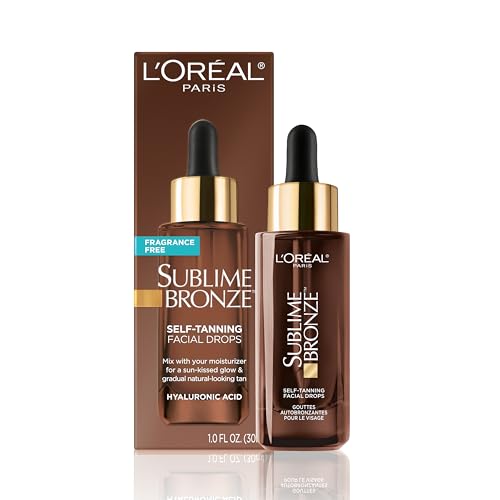
L'Oreal Paris Sublime Bronze Self Tanning Facial Drops with Hyaluronic Acid, Gradual Tan, Fragrance-Free, 1 fl. Oz

Any of these gives you a visible, controllable result this week, from a seller with a normal checkout and a normal return policy. No recurring shipments, no “glow guarantee” fine print, no swallowing a supplement on the strength of mechanism papers.
My verdict
GlowDrop is a clever marketing story built around one true fact: carotenoids can tint your skin. Everything beyond that, the melanin claims, the “scientifically-proven pathways,” the 85,000 glow girls, the dermatologist approval, is brand copy I cannot verify and partly contradicts itself. The documented buyer complaints about subscriptions and refunds make the deal worse.
If you want to look tanned, buy a bottle of topical DHA drops and mix it into your moisturizer tonight. You will see the result by morning, you will know exactly what you put where, and nobody will be billing you monthly for the privilege. As always, a cosmetic tan is not sun protection, whatever form it comes in.
Sources: GlowDrop’s product page and linked studies; Trustpilot reviews for glowdrop.co; MalwareTips and Ibisik write-ups on the buying experience; Reddit threads in r/beauty and r/Selftanning on drinkable tanning drops.
Self-Tanner on Tattoos: How It Changes the Look of Healed Ink
How to Self-Tan Hands Without Orange Knuckles
Cyklar Self-Tanning Milky Essence Review: Who Is It For?
Melanotan II vs DHA Self-Tanner: What the Barbie Peptide Gets Wrong
Can You Use Retinol With Self Tanner? A Night-by-Night Schedule
How to Get Rid of Tan Lines: The Fix That Actually Works Overnight