
How to Get Rid of Tan Lines: The Fix That Actually Works Overnight

- Self-tanner on the pale skin is the fastest fix. You see results in 6-8 hours, not days.
- Natural fading takes 2-4 weeks with exfoliation, SPF on the dark skin, and good moisturization.
- Home remedies like lemon and aloe help a little but won’t visibly fix a sharp tan line in days.
- The fix depends on where the tan line is. Sock, shoulder, bikini, and face lines each need a slightly different approach.
The fastest way to get rid of tan lines is to apply a gradual self-tanner to the paler areas of skin, which evens out the tone in 6-8 hours. For a slower, more permanent fix, consistent exfoliation 2-3 times a week speeds up cell turnover and fades the tan naturally over 2-4 weeks.
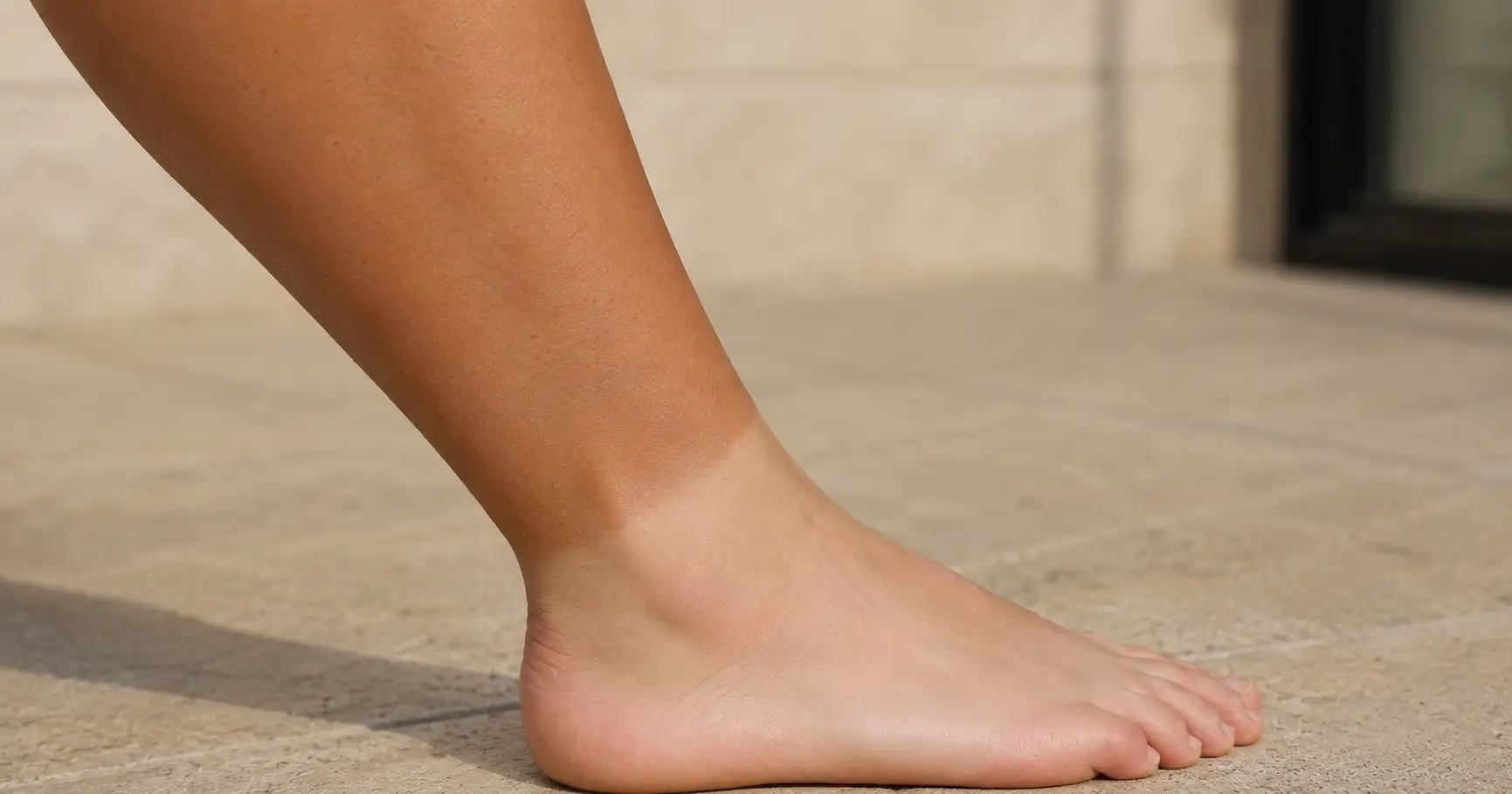
I got a brutal sock tan line two days before a beach wedding. The kind where your foot looks like it’s wearing a beige boot. I tried lemon juice, aloe, baking soda paste. The whole internet list. Forty-eight hours later, barely any difference.
What actually worked: I grabbed a gradual self-tanner and applied it to the pale skin below my ankle. By the next morning the line was barely visible. That’s the fix nobody talks about in these articles, and it’s the one I’m leading with.
Why tan lines are annoying to fix
A tan line is just a sharp boundary where your skin made melanin on one side and not the other. The pigment is inside the cells. You can’t scrub it off, and it doesn’t wash out. The tanned cells need to shed naturally before the color disappears.
Your skin’s cell turnover cycle runs around 28 days. You can speed it up a bit with exfoliation, but you can’t skip it entirely. That’s why fading a tan line naturally takes weeks. And why the self-tanner approach (bringing the pale skin up to match) is so much faster.
The fastest fix: self-tanner on the pale areas
Instead of waiting for the dark skin to fade, you bring the lighter skin up to match it. A gradual self-tanner applied to the pale areas can even out a visible tan line in one or two sessions.
-
Exfoliate the pale area lightly
-
Apply gradual self-tanner to the lighter skin only
-
Let it develop for 6-8 hours
-
Moisturize daily after that
Use a gradual formula, not a full-intensity self-tanner. You want to build slowly and match the existing tan rather than overshoot it. Gradual formulas are more forgiving if you misjudge the first application.
Use tanning drops mixed into your moisturizer instead of a body self-tanner. One or two drops applied only to the pale area, blended carefully. The face responds faster, so start with very little.
The slower fix: fade the tan naturally
If you’ve got a week or two before you need to look even, you can work the other direction. Fade the darker skin down instead of building the pale skin up.
Exfoliate 2-3 times a week
Physical exfoliation with a body scrub or mitt removes the top layer of dead, tanned cells and speeds up turnover. Do it in the shower, focus on the tan line area, rinse well, and moisturize after.
Chemical exfoliants work differently. Glycolic acid or lactic acid body lotions dissolve the bonds between dead cells rather than scrubbing them off, so they work more consistently and reach a little deeper. Apply at night, a few times a week.
Protect the tanned skin with SPF
While you’re fading a tan line, apply SPF 30+ to the darker area every time you go outside. If the tanned skin keeps getting darker, the contrast between light and dark gets worse even as you exfoliate. SPF stops the line from widening while the pale side catches up.
Home remedies: what actually helps and what doesn’t
Aloe vera: hydrating and soothing, supports healthy cell turnover, but won’t visibly fade a tan in days. Lemon juice: mild exfoliant from citric acid, but it can irritate skin in the sun and cause uneven pigmentation, so use sparingly. Baking soda paste: gentle physical exfoliant at best, roughly equivalent to a regular scrub. Vitamin C serum: the most legitimate option here. Helps with pigmentation over time and can mildly brighten tanned skin with consistent use.
How to fix tan lines by type
Sock tan lines
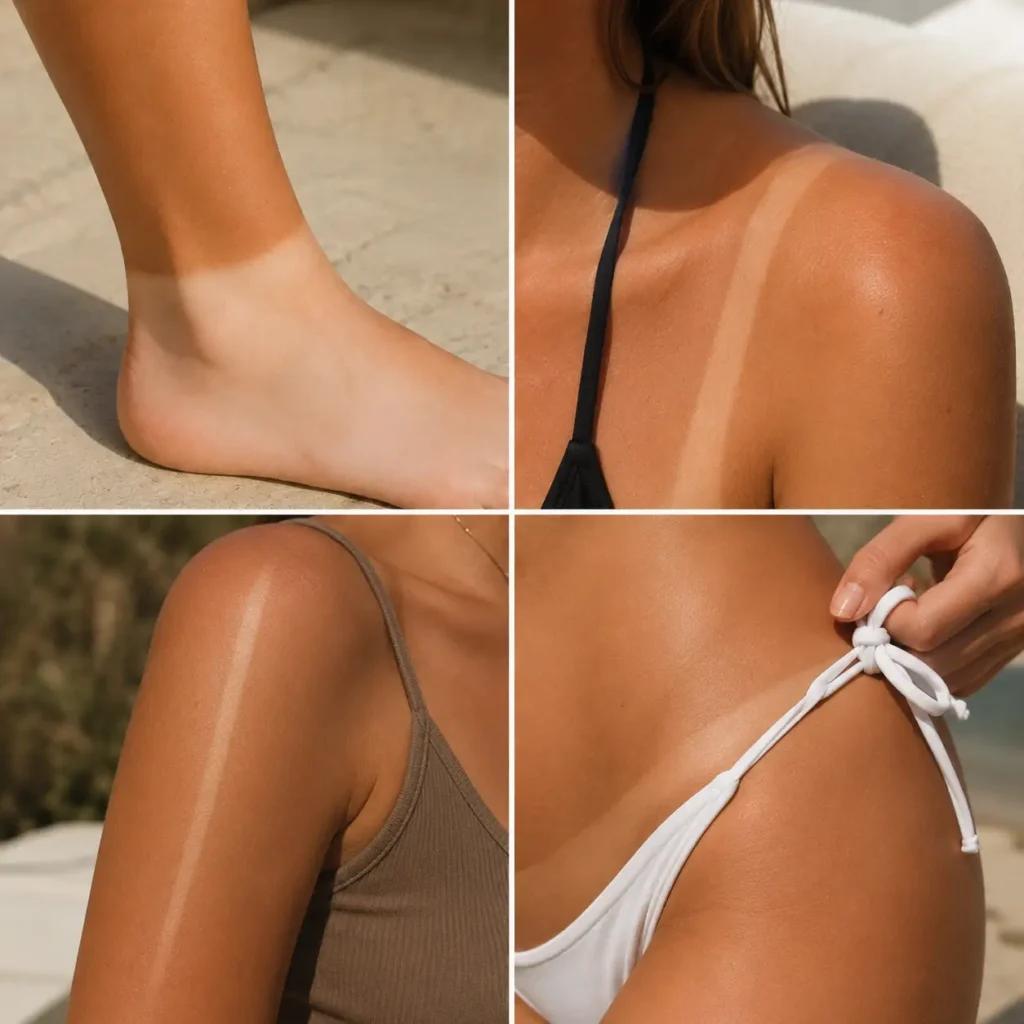
Usually the sharpest and most obvious because socks create a very clean edge. The self-tanner method works well here. Apply to the pale foot and ankle area, blend upward over the line into the tanned calf. Build up over 2-3 sessions rather than going heavy in one go.
Shoulder and bra strap tan lines
Shoulder lines can be tricky because the pale strips are narrow and surrounded by tanned skin on both sides. Use a small makeup brush instead of a sponge for more control when applying self-tanner to narrow pale areas. Blend carefully in both directions from the line.
Bikini tan lines
Apply gradual self-tanner to the paler areas and blend toward the tanned edges. If you’re going back in the sun before the tan line is even, protect the darker skin with SPF so it doesn’t keep pulling away from the lighter areas while you’re trying to close the gap.
Forehead and face tan lines (from sunglasses or a hat)
Use face-specific tanning drops, not a body formula. Mix one or two drops into your daily moisturizer and apply only to the pale area. The face is more reactive, so a small amount goes further than you’d expect.
Body formulas are made for thicker skin and can clog pores on the face. Stick to a face-specific tanning serum or drops formula.
How long does it take to even out tan lines?
With self-tanner: 6-24 hours for a noticeable result, 2-3 days for near-invisible with follow-up applications.
With natural fading only: 2-4 weeks depending on how dark the original tan was, your skin tone, and how consistently you exfoliate. Fair skin tends to fade faster (which also makes it easier to fix — if you need a pick, see the best self-tanners for pale skin). A deep tan from a long trip can take longer.
Do tan lines ever go away on their own?
Yes, eventually. As your skin naturally sheds its outer layer, the pigmented cells disappear and your base skin tone comes back. For most people, a tan from a single vacation fades completely within 3-6 weeks without doing anything extra.
One thing that extends it: if you keep getting sun while the lines are there, you’re continuously adding pigment to the darker areas. That makes the line stick around much longer.
What to avoid
- Over-scrubbing. Once a day maximum. Aggressive exfoliation causes inflammation, which can temporarily darken skin through post-inflammatory hyperpigmentation.
- Sunbathing the pale area hoping it’ll catch up. The tanned skin tans faster, so the contrast usually stays or gets worse.
- Skipping moisturizer. Dry skin sheds unevenly, which makes patchiness worse. Keep both sides of the line hydrated.
- Going heavy with self-tanner in one go. Build gradually over multiple sessions to avoid creating a new hard line where you stopped applying.
The fastest way to even out tan lines is self-tanner on the pale skin. It works in hours, not weeks. If you have more time, consistent exfoliation and SPF protection on the darker areas will fade them naturally in 2-4 weeks. Home remedies can help a little but won’t transform a visible line on a short timeline.
Peta Jane Self Tanner Review: Does the Allure-Winning Mousse Actually Deliver?
GlowDrop Review: Do Drinkable Tanning Drops Actually Work?
Self-Tanner on Tattoos: How It Changes the Look of Healed Ink
How to Self-Tan Hands Without Orange Knuckles
Cyklar Self-Tanning Milky Essence Review: Who Is It For?
Melanotan II vs DHA Self-Tanner: What the Barbie Peptide Gets Wrong