
Can You Use Retinol With Self Tanner? A Night-by-Night Schedule
Yes, you can use retinol and self-tanner in the same weekly routine. I keep them on different nights because retinol can leave the surface dry or flaky, and DHA catches more strongly on uneven areas. A recovery night between the two gives me a smoother, more predictable fade.
Use retinol and self-tanner on different nights. I leave one recovery night between them, or two when my skin looks dry. Moisturizer keeps the surface more even, and self-tan never replaces sunscreen.
Can retinol and self-tanner be used together?
They can share a routine, just not the same night. Retinol can leave the surface dry or flaky, while DHA develops in the outermost layer of skin. In my experience, that combination shows up as darker dry spots and a faster, less even fade.
The American Academy of Dermatology notes that retinoids can cause dryness and irritation, and Cleveland Clinic reports the same common effects. That context explains the cosmetic problem I see: self-tanner looks less even when the surface is flaky. I separate the products so I can judge the tan on its own.
I skip self-tanner when the face looks visibly red, cracked, or actively peeling. DHA can make those areas look darker and more obvious. I return to the cosmetic routine only when the surface looks even enough for a predictable application.
A night-by-night retinol and self-tanner schedule
This is the pattern I use with over-the-counter retinol and gradual face tanner or drops. Prescription retinoids follow a separate medical plan, so this article does not adjust their timing. For the cosmetic step, I wait for a night when the surface looks even and comfortable.
-
Night 1: Retinol
-
Night 2: Recovery
-
Night 3: Self-tanner
-
Night 4: Moisture
-
Night 5: Retinol
-
Night 6: Recovery
-
Night 7: Tan or recovery
A slower cosmetic schedule for easily dried skin
If retinol often leaves visible flakes, I add a second recovery night before self-tanner and another before the next retinol night. That creates a six-night cosmetic cycle. Prescription products stay on the schedule set by the clinician; the self-tan step fits around it rather than changing it.
How to apply self-tanner when you use retinol
I do not add a separate exfoliation step before tanning when retinol is already part of the week. An AHA, BHA, scrub, cleansing brush, or dermaplaning session can make the surface look less even. For a full walkthrough, see my self-tanner application method. Keep tanning drops out of retinol cream and mix them only with the product type the tanning brand recommends.
-
Start with an even surface
-
Moisturize first if needed
-
Use less than you think
-
Blend past the face
-
Protect the result the next morning
Products that fit this routine
I use product type and strength to control the routine. One mild retinol and one buildable tan are enough; the options below cover different budgets without turning the routine into a product list. If you are still choosing a format, my guide to mousse, drops, lotions, and gradual tanners explains where each one fits.
CeraVe Resurfacing Retinol Serum
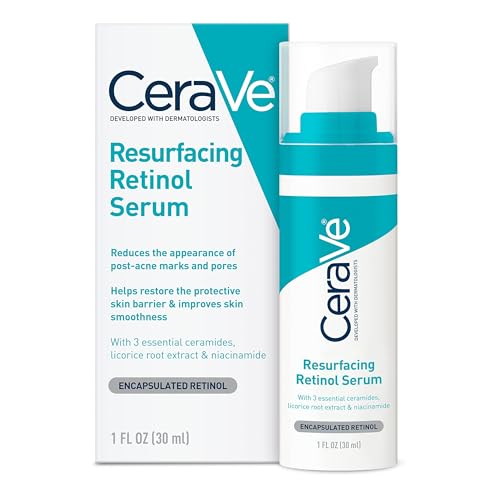
I like the light texture for a schedule with recovery nights because it does not feel like another heavy layer. Target shows 4.6/5 from more than 2,600 reviews. Many reviewers also mention the texture and gradual results, while some report dryness or peeling. I treat that split as a reminder to watch the finish on the skin instead of assuming every retinol night will look the same.
The Ordinary Retinol 0.2% in Squalane

Ulta lists it at 4.3/5 from 118 reviews. The lower price and stated 0.2% concentration make the choice easy to understand, while the oil-like texture is the trade-off. I would use the same spacing rule as any other retinol and judge it by how evenly the skin looks before tanning.
Isle of Paradise Self-Tan Face Drops

The control is the reason I would choose these over a full-strength face mousse. Sephora shoppers rate the drops highly for facial use, color, and overall satisfaction, which supports the same practical advantage I see with this format. Start with the bottle’s own drop range and keep the mix consistent from one application to the next.
Tanologist Medium Self-Tan Drops

Target shows 4.3/5 from more than 1,400 reviews. Buyers often mention the natural-looking, customizable color, while uneven results usually come back to mixing or application. That matches my experience with drops: measure them consistently and blend the moisturizer farther than the edge of the face.
What not to mix on self-tan night
- Retinol and retinal: I keep them on a separate night so the tan develops on its own.
- AHA or BHA exfoliants: glycolic, lactic, and salicylic acid can make the surface look drier and the color fade faster.
- Physical scrubs and cleansing brushes: uneven exfoliation tends to show once DHA develops. These are among the self-tanning mistakes I stopped making.
- Benzoyl peroxide: it can be drying and can bleach fabrics, so I leave it out of the tanning step.
- Heavy balm over fresh tanner: it can move the product around. I use an even layer of my usual moisturizer unless the tanning brand says otherwise.
How long should you wait between retinol and self-tanner?
I leave at least one full night between retinol and self-tanner. When the surface looks dry or flaky, I use two recovery nights. This is an editorial routine for a smoother cosmetic result, not a fixed medical waiting period. Retinol can also make an existing tan fade sooner as the outer cells shed, so I expect more frequent, lighter top-ups rather than one heavy application.
The schedule I use
- Retinol night, recovery night, self-tan night
- Add another recovery night when the surface looks dry
- Use consistent drop counts and blend beyond the face
Retinol and self-tanner can share a week when each has its own night. I watch the surface, leave a recovery night between them, and use buildable color so dry areas do not decide the result.
GlowDrop Review: Do Drinkable Tanning Drops Actually Work?
Self-Tanner on Tattoos: How It Changes the Look of Healed Ink
How to Self-Tan Hands Without Orange Knuckles
Cyklar Self-Tanning Milky Essence Review: Who Is It For?
Melanotan II vs DHA Self-Tanner: What the Barbie Peptide Gets Wrong
How to Get Rid of Tan Lines: The Fix That Actually Works Overnight