
Bronzing Bed vs Tanning Bed: What the Front Desk Won’t Tell You
First time I got asked “bronzing or regular” at a salon, I just picked one and hoped for the best. Most people do. And then a few weeks later they’re wondering why their color won’t go any darker, or why it disappears so fast between sessions.
Both beds use UV light. What changes is the kind of color you get, how deep it sits, and how long it actually sticks around. Once you understand that, the choice at the front desk takes about ten seconds.
Tanning Bed Differences: It Starts With the Lamps
Regular beds, sold in most salons as Level 1 and Level 2, run low-pressure lamps. Those lamps put out a higher share of UVB. UVB builds color fast and close to the surface. Two or three sessions in and you see something happening, which is why regular beds are where everyone starts.
Bronzing beds, at Level 3 and above, use medium or high-pressure lamps. Those lamps flip the ratio. More UVA, far less UVB. UVA reaches deeper. The color takes longer to show up, but it develops in a layer that doesn’t shed in a week.
That’s really the core of it. Everything you notice later comes from that.
Regular Tanning Beds: Fast Color, Short Window
Level 1 and Level 2 beds are the right tool for building a base. Sessions run longer, around 20 minutes, and the color response is quick enough to keep you motivated through the first few weeks.
The ceiling usually arrives around weeks four or five. Color stops building and you’re just replacing what fades. People at this stage say tanning “stopped working.” It didn’t. A regular bed can only go so far because the color lives in the outer layers of skin, the ones that turn over every few weeks naturally. Skip a week or ten days and most of it goes with it.
That’s not really a flaw, it’s just where regular beds tend to top out.
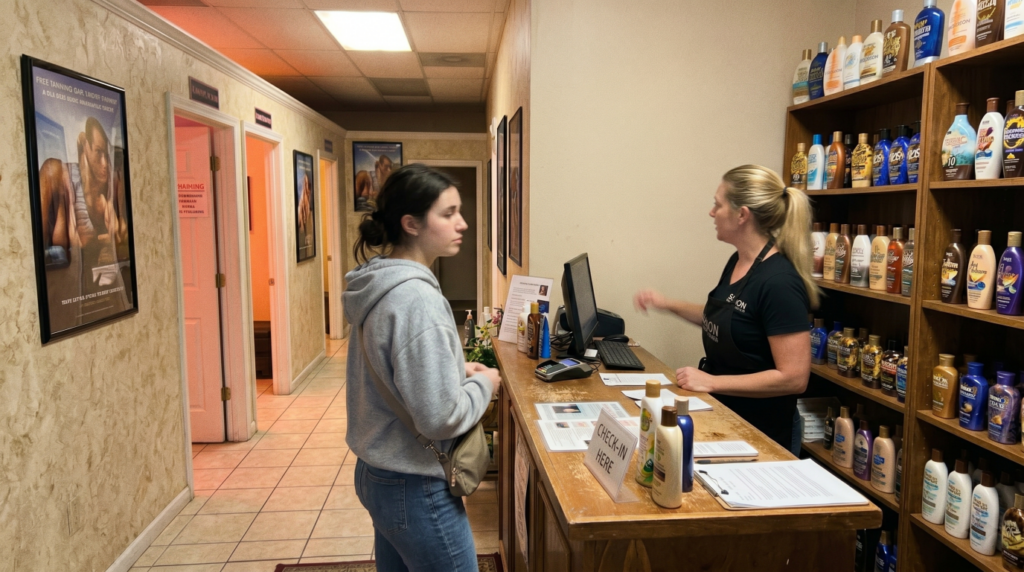
What Is a Bronzing Bed and How Do Results Actually Differ
A bronzing bed isn’t a different category of tanning. It’s the same UV process with a lamp profile that shifts the result. High-pressure lamps cut UVB way down and concentrate UVA. Sessions run shorter, 10 to 15 minutes in most Level 3 and Level 4 setups. The first time you see that shorter session time it feels counterintuitive.
The color develops differently too. Walk out of a bronzing session and you may see almost nothing. First time it happens you think the session didn’t work. Then two days later it hits and it’s darker than anything you got from longer regular sessions.
People describe it as looking like they came back from a week somewhere warm rather than a few hours at a salon. That delayed development catches most people off guard. Worth knowing before you book.
High Pressure Tanning Beds and Why the Tan Lasts Longer
The fade rate is where high-pressure beds separate from everything else at a regular salon.
Regular beds, with their higher UVB output, speed up how fast the skin’s surface turns over. Color builds faster but goes faster too. Some estimates put that cycle at every five to seven days instead of the normal 28-day window. The color fades at the same pace.
High-pressure bronzing beds keep that natural turnover cycle closer to normal because UVB stays minimal. The color sits deeper, the surface replaces itself at its usual rate, and the tan holds two to three weeks with basic aftercare instead of one. Fewer sessions to maintain it, better result between them.
That’s why people feel like bronzing beds “last longer” without really knowing why. Slower start, longer payoff.
How to Build a Base Tan Before Using a Bronzing Bed
Going straight into a bronzing bed from pale produces patchy, inconsistent results. There isn’t enough existing pigment for the deeper UVA response to build on, so color comes in uneven or barely visible.
Eight to ten sessions in a regular bed, three times a week, gives you enough foundation. It feels slow when you’re in it, but this is the part that makes everything else work later. By that point you’ll have visible, even color across your body and the bronzing bed has something to work with. Most experienced tanners follow this sequence without thinking about it. Two to three weeks at Level 1 or Level 2, then move up. The difference in quality from session to session becomes obvious pretty quickly.
Most people skip this step because they want faster results, and it usually backfires.
Tanning Bed Levels Explained: Which One to Choose Right Now
No base, starting from scratch: Level 1 or Level 2. Three times a week for the first two to three weeks. The goal is foundation, not depth yet.
Already have color going: Level 3 or Level 4 bronzing bed. Better depth per session, longer between visits, better duration overall.
Trying to maintain a tan through a busy stretch: a bronzing session once a week holds more color than three regular sessions. The math works in your favor once you have a base.
Event coming up in ten days: regular bed. Surface color shows up faster and fades faster, but for a short-term target it gets you there.
You don’t need to overthink this. Most people naturally move up once they notice their sessions stop changing anything.
Accelerator vs Bronzer: Matching Your Lotion to the Bed Type
Lotion type isn’t interchangeable between bed levels and most people never adjust it. I didn’t realise this for a long time and just used the same bottle everywhere, which is probably why my results felt stuck for a while. Most people don’t realise this until they’ve already spent money on the wrong type.
In a regular bed, an accelerator is the right choice. It supports the tanning process and keeps the surface layer hydrated so color develops more evenly. Dry, rough texture grabs product unevenly and fades faster.
In a bronzing bed, an accelerator still works but a bronzer or maximizer gets more out of each session. Bronzers add a DHA layer on top of the UV color response. That combination produces a more dimensional finish than UV alone. If you’ve just moved up from regular beds, give the accelerator three or four bronzing sessions before switching. Your skin is still adapting to the different lamp output.
The best tanning bed lotions by type and level are ranked separately if you need a specific pick.
Bronzing Bed Results: Why Color Shows Up Days Later, Not the Same Day
Most people don’t notice the difference during the session. They notice it two or three days later.
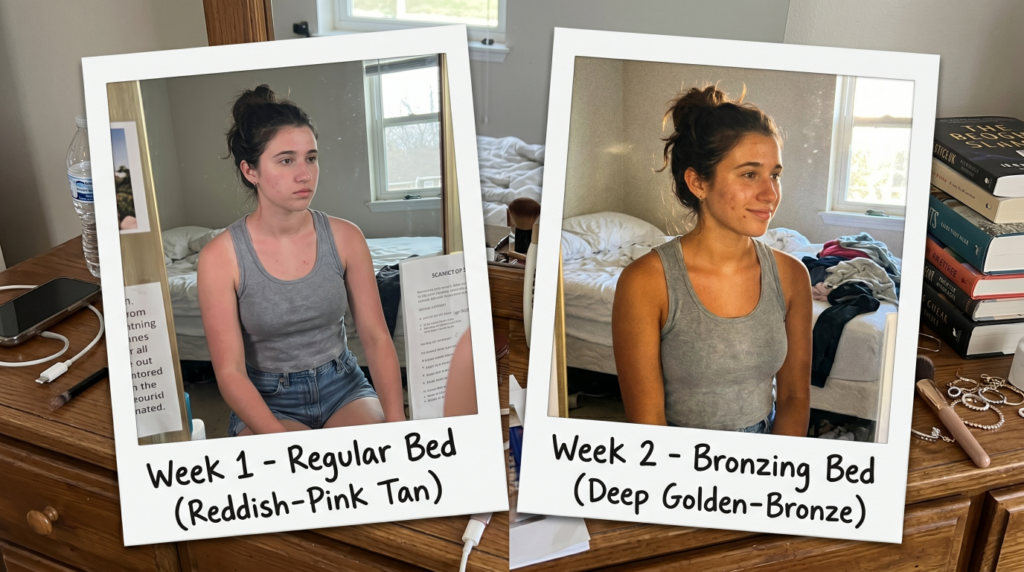
UVA triggers a slower pigment response than UVB. The color develops over 48 to 72 hours after the session ends. Regular beds show something faster because UVB works closer to the surface. Check your color two days after a bronzing session, not the evening of. That’s when you actually see what the session did.
The Naming Problem: “Bronzing Bed” Means Different Things at Different Salons
Some salons use “bronzing” as the name for their entry-level bed. Marketing label, nothing more. No different technically from any other Level 1 low-pressure setup. Other salons use it correctly for high-pressure beds with shorter sessions and a genuinely different lamp profile.
Before paying the upgrade price, ask whether the bed uses low-pressure or high-pressure lamps. High-pressure bronzing beds run 10 to 15 minutes. A “bronzing bed” with 20-minute sessions is a regular bed with a different name on the booking screen.
Once you notice this, you start seeing how inconsistent the naming is across salons. Worth asking once. Saves you guessing every single time after that.
What Most People Want to Know Before Switching Beds
Not a strict rule, but results are better with one. Two to three weeks in a regular bed first gives the bronzing process something to work with. Go in pale and the color comes in patchy or barely visible.
Depth and where the pigment develops. Regular bed color reads brighter early and fades quickly. Bronzing bed color develops deeper and holds a more even, dimensional finish. Most people find it looks closer to outdoor color than salon color.
Yes. Some people run a regular session mid-week and a bronzing session at the end. Surface color plus deeper color developing together. Not mandatory, but it works for people who want speed and duration at the same time.
Normal. Color takes 48 to 72 hours to develop. Check two days later. If nothing appears after a week of consistent sessions, the issue is usually prep: rough surface texture, no lotion, or not enough base color going in.
Usually not. Most gym beds are Level 1 or Level 2 low-pressure setups regardless of what they’re called on the app. If depth and lasting color matter to you, a dedicated tanning salon with Level 3 or higher equipment produces a noticeably different result than a gym membership add-on.
Still building a base and not sure what product to use at each stage, the best tanning bed lotions by type and level covers the full breakdown. For aftercare that keeps color from fading early, what to put on skin after a tanning bed is the reference. And if you’re weighing whether a bed makes sense at all for your situation, self tanner vs tanning bed has the honest comparison.
been going to regular beds for like two years and my gym just added bronzing ones last month. been switching back and forth honestly not sure which to stick with. this broke it down way better than anything else ive read. still not 100% clear on one thing tho, if youve already built a base on regular beds does switching to bronzing pick up from there or do you kinda start over?
Hey tiler! Your base carries over completely, the melanin is already built up so switching beds won’t reset anything. If anything bronzing beds tend to give you more surface color faster so your results might actually look better. The one thing worth thinking about is your lotion since bronzing lamps run at a different UV spectrum. I broke down what works in each type here if it helps: https://bronzeindex.com/tanning-oils-lotions/best-tanning-bed-lotion/