
First Time in a Tanning Bed: What Nobody Tells You Before Session One
Not knowing what to expect your first time in a tanning bed is completely normal. Most people walk out of their first session seeing nothing and think it didn’t work. Or they feel slightly warm afterward and aren’t sure if that’s good or bad. This covers everything that happens before, during, and after, including what those reactions mean and what to do with them.
Tanning Bed Tips for Beginners: What to Do Before Your Session
The day before matters more than the morning of. Get these right and the session starts from the best possible base.
Exfoliate the day before, not the same morning
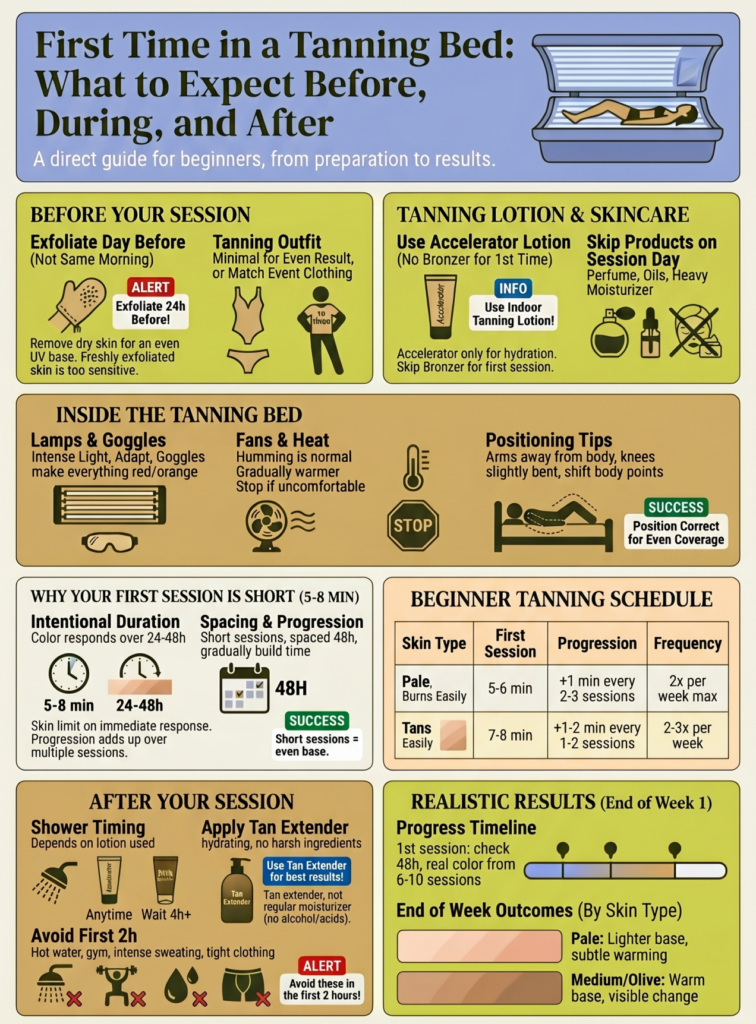
Exfoliating removes the dry surface layer that grabs UV unevenly. Do it 24 hours before your session, not right before. Freshly exfoliated skin can be reactive, and going in too soon means the surface is more sensitive than it needs to be. A basic scrub mitt on the whole body the evening before is enough.
Skip the full exfoliation on the actual day of your session. Just shower normally, rinse clean, and make sure the skin is completely dry before you go in.
What to wear to a tanning bed
Whatever you’re comfortable with. Most people go in a swimsuit, underwear, or nothing at all. The practical point: any fabric blocks UV, so whatever you cover stays the original tone. If you want an even all-over result, go with less. If you’re building color for a specific event where you’ll be wearing something, tan in that coverage so the lines match.
Bring something loose to put on after. Tight waistbands and straps pressing against freshly tanned skin can cause uneven patches as the color develops.
Indoor tanning lotion: what to use for your first session
You need a lotion made specifically for indoor tanning. Regular body lotion, outdoor tanning oil, and sunscreen all interfere with the process and can damage the acrylic surface of the bed.
For a first session, an accelerator without bronzer is the right call. No added color, no DHA reaction, just hydration support so the tan develops more evenly. If you’re not sure which type of lotion to start with or what separates an accelerator from a bronzer, that’s covered in full before you pick anything. For specific product options, the best tanning bed lotion guide ranks them by type and experience level.
Apply it about 15 minutes before you get in, not right as you’re walking through the door.
Skip perfume, oils, and heavy moisturizer on session day
Perfume and essential oils on the skin can react with UV and cause patchy or uneven results. Heavy daily moisturizer leaves a film that affects how evenly the UV reaches the skin. If you moisturize regularly, stick to a very light layer at least a few hours before and skip anything on the face before the session.
What Actually Happens Inside a Tanning Bed
Nobody describes this part. Here’s what you’ll experience.
The moment you close the lid, the lamps kick in almost immediately. Depending on the bed, the light is orange-tinted or a bright white-blue. It’s intense. Your eyes will adapt behind the goggles but it’s normal for everything to look very orange or red with them on.
The sound is a low hum from the fans running to keep the bed cool. Some beds are quieter than others, but you’ll hear it throughout. If the fans seem to stop or the heat builds fast, that’s a sign to tell staff before your next session.
The heat builds gradually over the first two to three minutes. By the halfway point you’ll feel warm but not uncomfortable. The acrylic surface feels warm against your back after a few minutes, noticeably warmer than when you lay down. Some people notice they’ve been holding their breath without realizing it, especially in the first minute. That’s normal. Breathe normally and let the tension go.
It looks more intimidating than it is. Once you’re in, it feels closer to lying under a warm light than anything else. The session timer runs, you can stop it whenever you want, and nothing locks.
If at any point it feels too hot, too tight, or you just want out: press the stop button inside the bed and get out. There’s no obligation to stay the full time. Leaving two minutes early on your first session is not a problem.
A few positioning details that make a difference:
Keep your arms a few inches away from your sides. Arms pressed flat against your body means those inner surfaces don’t get even exposure, and you end up with pale strips along your sides. Same logic for the backs of your knees: slightly bent rather than flat against the surface.
Lay-down beds leave pressure points wherever your body contacts the acrylic. Small shifts every few minutes help, or you can ask about stand-up options for your next session if even coverage is the priority.
Why Your First Tanning Bed Session Is Shorter Than You Expect
Five to eight minutes feels like nothing. It’s intentional, and not just because of burning risk.
Your skin can only produce so much color response per session regardless of time. Going longer in session one doesn’t accelerate the process. The color develops in the 24 to 48 hours after you leave, not while you’re in the bed. What a longer first session does is increase the chance of surface redness without producing any more actual color.
The right approach is short sessions, spaced 48 hours apart, building time gradually. The progression adds up faster than a single long session ever would. Most people see a real difference around sessions three to five, not one to two.
If You Walk Out and See Nothing: What It Actually Means
This is the point where most people give up. Don’t.
Walking out of your first session looking exactly the same as when you walked in is completely normal. The process that produces color takes 24 to 48 hours to show. The session triggers it, but the visible result comes later.
You might notice your skin looks slightly pink or feels warm for an hour or two afterward. That’s the surface blood vessels responding to the heat from the lamps, not the tan developing. It fades on its own and has nothing to do with how much color you’ll see the next day.
What you’re looking for shows up 24 to 48 hours after the session, not immediately after. Check the next morning. If you have medium or olive skin you might see a subtle base already. If you have pale skin you may need to check at 48 hours. Both timelines are normal.
If you see nothing at all after 48 hours following your first session, that’s also normal for very fair skin. The base builds across multiple sessions, not one.
What to Do After a Tanning Bed Session
Should you shower before or after a tanning bed?
Before, yes, but not right before. Shower at least an hour ahead of the session so the skin has time to settle and dry completely. Damp skin absorbs UV unevenly.
After the session, when you shower depends on the lotion you used. If you used an accelerator with no bronzer, timing doesn’t matter and you can shower whenever you want. If the lotion contained a DHA bronzer, the color development reaction is still active for several hours after the session ends. Showering too soon stops it early and produces a lighter, less even result.
General rule: accelerator only, rinse when ready. Cosmetic bronzer, wait at least two hours. DHA bronzer, wait a minimum of four hours. The full breakdown of timing and what to apply is in what to put on skin after a tanning bed.
What to apply to your skin after a tanning bed session
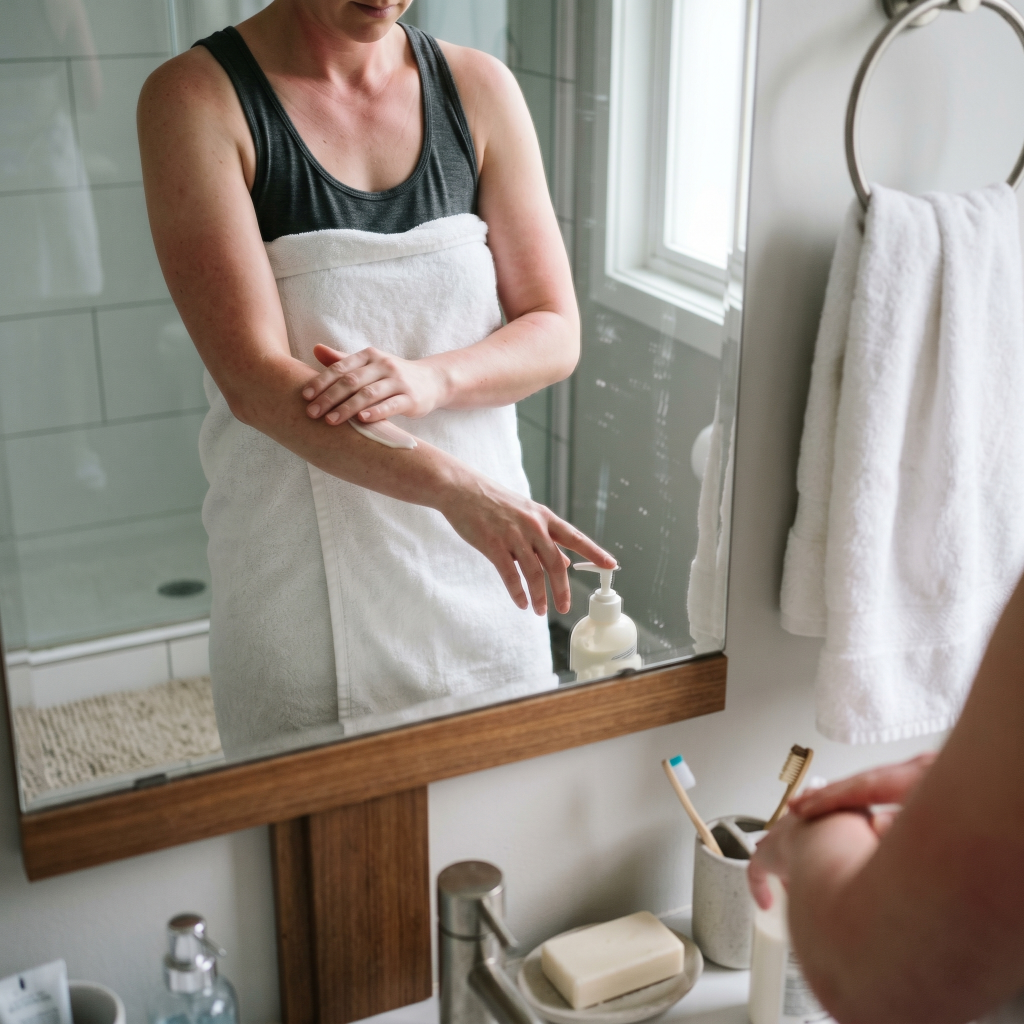
After the skin cools down, which takes about 10 to 15 minutes, apply a plain moisturizer or tan extender. Nothing with alcohol, exfoliating acids, or mineral oil. Those three things shorten color faster than almost anything else.
The category of product that works best here is a tan extender, a moisturizer formulated specifically without the ingredients that speed up fading. The best lotion after tanning bed covers the options if you want a specific pick.
What to avoid in the first two hours
Hot showers strip the surface oils that hold color. Keep the water lukewarm and the shower short. Skip the gym, the pool, and anything that makes you sweat heavily. Avoid tight clothing against the skin while the color is still developing. None of these permanently damage anything, they just cut short the development window.
Tanning Bed Schedule for Beginners: How Often and How Long
The goal in the first two weeks is building a base. Not getting dark, not pushing time, just establishing enough color that subsequent sessions have something to work with.
| Skin type | First session | How to progress | Frequency |
|---|---|---|---|
| Pale, burns easily | 5-6 min | Add 1 min every 2-3 sessions | 2x per week max |
| Tans moderately to easily | 7-8 min | Add 1-2 min every 1-2 sessions | 2-3x per week |
Always leave at least 48 hours between sessions. Not for safety reasons alone, the color from one session is still developing during that window. Going back the next day doesn’t compound the result, it just adds load while the first session is still working.
Once you have a visible base after the first two weeks, the frequency and time can shift. That transition and what it looks like is covered in the bronzing bed vs tanning bed guide if you want to understand what changes at each level.
Tanning Bed Before and After the First Week: Realistic Results by Skin Type
The single biggest mistake beginners make is judging results too early. Here’s the actual timeline.
Session 1: Nothing visible at the session. Normal. Check at 48 hours.
48 hours after session 1: Pale skin may see almost nothing yet. Medium or olive skin may see a very light base starting. Both are correct outcomes.
Sessions 2-3: The base builds session over session. By session three most people with medium skin have a visible change. Pale skin may still look subtle at this point. That’s still on track.
End of first week (3-4 sessions): Medium and olive skin types usually have a clear warm base. Pale skin has a lighter version of the same. Neither looks “tanned” yet in the dramatic sense. The base is the foundation, not the result.
Sessions 6-10: Color deepens noticeably. This is when results start looking like what most people mean when they say tanning bed tan.
If you reach session five with pale skin and see very little, you’re not doing anything wrong. Fair skin types build slowly and sometimes need the full first two weeks before the base becomes clearly visible. The question to ask is whether the skin responded at all, not whether it’s as dark as someone with a different baseline. For a full breakdown of what drives these differences, how long it takes to get a tan explains the variables by skin type.
The first session feels underwhelming if you expect instant results. It makes sense once you understand how the process works. Short session, wait 48 hours, build gradually. That’s the whole system.
Questions Every Beginner Asks After Session One
Yes, but at least an hour before so the skin is fully dry. Freshly showered skin absorbs UV unevenly because the surface barrier is still slightly open from water contact.
Get out. There’s a stop button inside every commercial tanning bed. Using it is not a problem. Starting with shorter sessions and building up is a better strategy than forcing through discomfort.
Not by how you look when you step out. Check 24 to 48 hours later. If you see even a very slight warming of your tone, it worked.
After 8 to 10 sessions with a visible, even base. Going up too soon produces uneven results because the higher-UVA output in Level 3 and Level 4 beds needs existing pigment to build on. What changes at each level and why it matters is in the bronzing bed vs tanning bed breakdown.
With basic aftercare, a UV tan built over two to three weeks holds color for one to two weeks after the last session. Without moisturizing it fades noticeably faster. The full timeline by method and skin type is in how long does a tan last.
GlowDrop Review: Do Drinkable Tanning Drops Actually Work?
Self-Tanner on Tattoos: How It Changes the Look of Healed Ink
How to Self-Tan Hands Without Orange Knuckles
Cyklar Self-Tanning Milky Essence Review: Who Is It For?
Melanotan II vs DHA Self-Tanner: What the Barbie Peptide Gets Wrong
Can You Use Retinol With Self Tanner? A Night-by-Night Schedule